
The Hotel Development Guide is a structured knowledge platform created to address a fundamental gap within the hospitality industry: the lack of a clear, practical, and accessible framework for hotel development. While the sector operates globally, expertise remains fragmented across disciplines, organisations, and regions, often making it difficult for developers, investors, and professionals to access reliable, experience-based guidance. This platform brings together those perspectives into a single, evolving resource designed to support better decision-making across the full development lifecycle.
The platform is built on the understanding that hotels are among the most complex real estate asset classes, requiring the integration of market analysis, financial structuring, design coordination, operational planning, and long-term asset management. By consolidating these elements into a coherent body of knowledge, the Hotel Development Guide aims to improve project outcomes, reduce inefficiencies, and support a more professional and transparent approach to hotel development, particularly in emerging and transitional markets.
Why the Hotel Development Guide Exists
Hotel development sits at the intersection of multiple disciplines, yet the industry often operates in silos. Developers, operators, consultants, designers, and investors frequently approach projects from their own perspectives, with limited visibility into the priorities and constraints of others. This fragmentation can lead to misalignment, inefficiencies, and avoidable project risks, particularly in complex or emerging markets where institutional knowledge may be less accessible.
The Hotel Development Guide was created to bridge this gap. It provides a structured environment where knowledge can be organised, contextualised, and shared across disciplines. Rather than focusing solely on theory or high-level concepts, the platform emphasises practical insight, real-world application, and the interconnected nature of development decisions. In doing so, it aims to reflect how hotel projects function in practice: dynamic, multi-layered, and highly dependent on coordination among stakeholders.
What the Platform Covers
The Hotel Development Guide is structured to reflect the full complexity of hotel development, not as a linear process but as an interconnected system of decisions, disciplines, and long-term considerations. The platform brings together the technical, commercial, operational, and strategic elements that define hotel projects, providing a framework that supports both understanding and practical application across different stages of development.
Rather than treating each component in isolation, the platform is designed to highlight how these elements interact. From early-stage feasibility and concept positioning through to design coordination, financial structuring, and operational planning, each area is presented within the broader context of the development process. This approach recognises that successful hotel projects depend not only on individual expertise but on the alignment and integration of multiple disciplines over time.
Core Skills in Hotel Development
Hotel development requires a broad and integrated skill set that extends beyond traditional real estate disciplines. A developer must understand how a hotel functions as both a physical asset and an operating business, requiring knowledge that spans market analysis, finance, design, engineering, and operations. While specialists lead individual areas, the developer’s role is to engage with each discipline sufficiently to guide decision-making and ensure that project objectives remain aligned.
The following framework outlines the core areas of knowledge typically required in hotel development. These disciplines represent the foundation of the platform’s content, covering the key areas that influence how a hotel is conceived, designed, delivered, and operated. Together, they form the basis for a structured understanding of the development process.
| Core Area | Scope of Understanding | Key Components | Typical Stakeholders |
|---|---|---|---|
| Development Strategy & Feasibility | Defining the project rationale and viability | Market analysis, demand forecasting, site evaluation, feasibility studies, concept alignment | Developers, feasibility consultants, advisors |
| Hotel Operations & Commercial Strategy | Understanding how the hotel will function and generate revenue | Operating models, F&B strategy, staffing structures, service levels, revenue management, distribution | Operators, revenue managers, brand teams |
| Finance & Investment Structuring | Structuring the project financially and evaluating returns | Development budgets, capital stack, funding sources, IRR/NPV analysis, valuation, exit strategy | Investors, lenders, asset managers |
| Design, Architecture & Spatial Planning | Translating the concept into a physical, functional asset | Masterplanning, architecture, interior design, guest flow, back-of-house planning, brand standards integration | Architects, designers, operators |
| Engineering & Technical Systems | Ensuring the building functions efficiently and safely | MEPF systems, HVAC, fire & life safety, utilities, building performance, energy systems | Engineers, technical consultants |
| Project Delivery & Cost Management | Managing the execution of the development process | Project management, procurement strategy, cost control, programme scheduling, contractor coordination | Project managers, QS, contractors |
| Legal, Contracts & Risk Management | Structuring agreements and managing legal exposure | HMAs, franchise agreements, construction contracts, regulatory compliance, risk allocation | Lawyers, developers, operators |
| Sustainability & Asset Lifecycle Planning | Ensuring long-term performance and responsible development | ESG strategy, energy efficiency, certifications, lifecycle costing, CapEx planning, asset management | ESG consultants, asset managers, owners |
The Developer Mindset: A Holistic Approach
While technical knowledge across disciplines is essential, successful hotel development ultimately depends on maintaining a holistic, integrated perspective. Decisions made in one area, such as design, finance, or operations, have direct implications for other areas, and misalignment among these elements can significantly impact the asset’s long-term performance. The developer’s role is therefore not only to understand each discipline, but to ensure that they function cohesively as part of a unified strategy.
This holistic approach requires the ability to balance competing priorities, manage complexity, and adapt to changing project conditions. It also involves a continuous process of coordination between stakeholders, aligning technical requirements with commercial objectives and operational realities. In this context, hotel development is best understood not as a sequence of tasks, but as a system of interdependent decisions that must be managed collectively.
Future-Oriented Development and Industry Evolution
Hotel development does not take place in a static environment. The sector is continually shaped by changes in technology, guest expectations, investment dynamics, and regulatory frameworks. As a result, developers must adopt a forward-looking perspective, considering not only current project requirements but also how assets will perform and remain relevant over time.
The Hotel Development Guide incorporates this future-oriented view by recognising the role of industry disruptors and emerging trends in shaping development strategies. From digital transformation and evolving distribution models to sustainability requirements and new operational concepts, these factors increasingly influence how hotels are planned and delivered. Understanding these dynamics is essential to creating assets that are resilient, adaptable, and aligned with the future direction of the hospitality industry.
An Open Platform for Industry Participation
The Hotel Development Guide is designed as an open and collaborative platform. Contributions from across the industry are actively encouraged, particularly from professionals with direct experience in hotel development, operations, design, finance, and advisory roles. The objective is to move beyond a single viewpoint and build a multidisciplinary knowledge base that reflects the sector’s diversity and complexity.
Contributions may take the form of project case studies, technical insights, regional market perspectives, or specialist knowledge within specific disciplines. There is particular interest in practical, experience-based content that highlights lessons learned, challenges encountered, and solutions implemented. By incorporating a wider range of voices, the platform aims to strengthen its relevance, expand its coverage, and support a more connected and informed development community.
Collaboration, Education, and Commercial Opportunities
As the platform develops, there is scope for broader collaboration across education, research, and commercial initiatives aligned with industry goals. This may include partnerships with academic institutions, contributions to professional training and development programmes, and the creation of structured learning resources for those entering or advancing within the sector. The platform is particularly well positioned to support knowledge transfer between established markets and emerging regions where access to specialised expertise may be more limited.
There is also potential for carefully aligned commercial participation, including curated industry directories, sponsorship of relevant content areas, and collaboration with organisations that contribute meaningfully to the development process. Any such initiatives will be structured to maintain the platform’s integrity, independence, and practical value, ensuring that commercial activity supports rather than detracts from its core purpose as a trusted industry resource.
Commitment to Professional Standards
A central objective of the Hotel Development Guide is to promote higher levels of professionalism, transparency, and consistency within hotel development. The platform advocates for structured planning approaches, clear stakeholder alignment, and a deeper understanding of both the technical and commercial realities of projects. By highlighting best practices and encouraging informed decision-making, it seeks to contribute to stronger, more resilient developments across a range of markets.
This commitment extends to the way information is presented and shared. Content is designed to be practical, balanced, and grounded in industry experience, recognising that hotel development rarely follows a single formula. Instead, the platform reflects the need for adaptability, critical thinking, and collaboration in navigating the complexities of real-world projects.
About the Author
The Hotel Development Guide was founded by Darren Blanchard, a hospitality professional with over four decades of international experience across hotel operations, development, and consultancy. His career has spanned senior management roles and advisory positions, with a particular focus on emerging markets and complex development environments. This experience has informed the platform’s structure and content, as well as its emphasis on practical, experience-driven insights.
Darren’s work has consistently focused on bridging the gap between operational understanding and development strategy, recognising the importance of aligning design, financial, and operational considerations from the earliest stages of a project. Through the Hotel Development Guide, he aims to share this perspective more broadly while creating a platform that extends beyond any single individual’s experience.
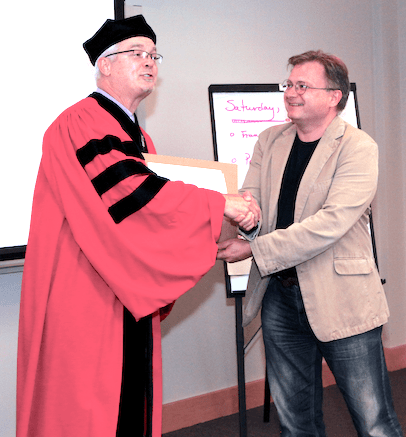
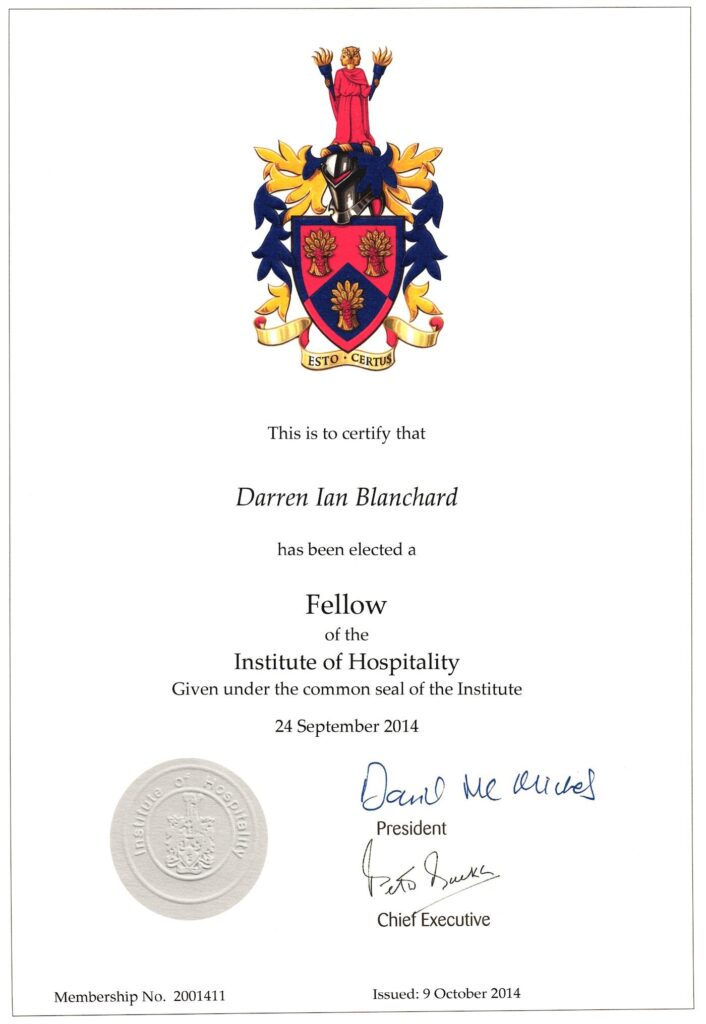
Darren is a graduate in Hotel Catering and Institutional Management from the University of Brighton (1989), and later completed the Real Estate Development and Hotel Investment programme at the Cornell University School of Hotel Administration (2012). He was awarded Fellow status of the Institute of Hospitality in September 2014 and is an accredited professional with the International WELL Building Institute (since October 2020), reflecting an ongoing commitment to professional development and evolving industry standards.
Engage with the Hotel Development Guide
The Hotel Development Guide is intended as a platform for ongoing dialogue, knowledge sharing, and industry engagement. Professionals involved in hotel development, including developers, investors, operators, consultants, designers, and advisors, are encouraged to connect, contribute, and explore opportunities for collaboration.
Whether through sharing insights, contributing content, participating in future initiatives, or exploring potential partnerships, engagement with the platform is welcomed. As the industry continues to evolve, the value of shared knowledge and collective expertise becomes increasingly important in shaping successful and sustainable hotel developments.
Join us in shaping the future of hospitality and connect with Darren on LinkedIn to discuss avenues of cooperation.
Further Resources:
The Hotel Development Guide Front Page
HotelDevelopmentGuide.com – The Advantages of Hotel Development
HotelDevelopmentGuide.com – The Challenges of Hotel Development
HotelDevelopmentGuide.com – Investor Motivations to Build Hotels
HotelDevelopmentGuide.com – Hotels vs. Offices & other CRE
Site Overview cluster of HDG webpages: HDG Homepage – The Challenges of Hotel Development – The Advantages of Hotel Investment – Investor Motivation in Hotel Development – Hotels vs Commercial Real Estate Sectors – About the Hotel Development Guide