
Climate change in hotel development is becoming an increasingly important consideration for developers, investors, architects, engineers and hotel operators. Rising temperatures, changing weather patterns, more frequent extreme weather events and increasing pressure on natural resources are influencing where hotels are built, how they are designed and how they are expected to perform throughout their operational life. As climate-related risks become more widely recognised, they are increasingly being considered alongside traditional development factors such as market demand, accessibility, planning constraints and financial viability.
Hotels are long-term assets that are often expected to remain in operation for fifty years or more. Decisions made during site selection, master planning and building design, therefore, need to consider not only current environmental conditions but also how local climates may evolve over the coming decades. Climate change can influence everything from flood risk and water availability to cooling requirements, construction costs, operational efficiency, insurance premiums and long-term asset value. Considering these factors during the early stages of development can improve resilience, reduce future operating costs and help protect investment returns.
This page examines how climate change is influencing hotel development at every stage of the project lifecycle. It explores the implications for site selection, master planning, building design, engineering systems, construction, hotel operations, and long-term investment planning, while highlighting practical strategies to create more resilient, efficient, and commercially successful hotel developments. Rather than treating climate change as a separate environmental issue, successful projects increasingly integrate climate considerations into the overall development process from the very beginning.
- Why Climate Change Matters to Hotel Development
- Climate Change and Hotel Site Selection
- Planning Hotels for a Changing Climate
- Designing Building Services for Future Climate Conditions
- Human Comfort in Hotels in a Changing Climate
- Water Management in a Changing Climate
- Building for Resilience and Long-Term Value
- Operating Hotels in a Changing Climate
- Climate Risk, Investment and Insurance
- Building Climate Resilience
- The Future of Climate Change in Hotel Development
Why Climate Change Matters to Hotel Development
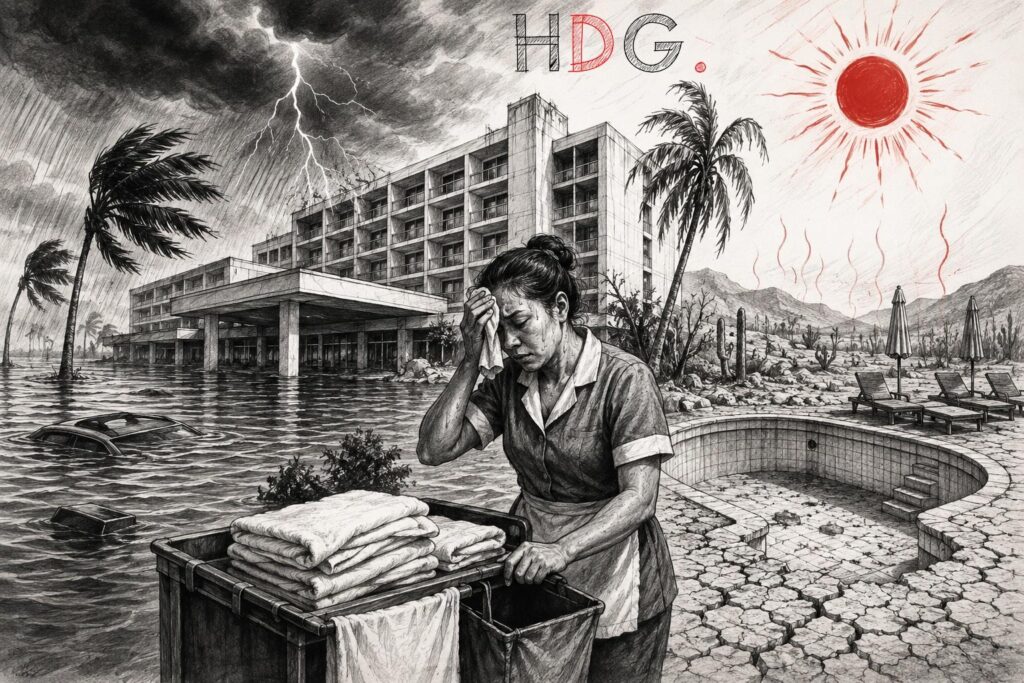
Climate change is no longer simply an environmental issue to be addressed through sustainability initiatives or corporate responsibility programmes. For the hotel industry, it is becoming an important commercial consideration that influences development decisions from the earliest stages of a project. Hotels are expected to operate successfully for many decades, and developers must increasingly consider how changing climatic conditions may affect construction, operations, guest expectations and long-term investment performance throughout that lifespan.
While the specific impacts of climate change will vary between destinations, the underlying challenge is the same: hotels must be designed and developed to remain safe, efficient, attractive and financially viable in a changing environment. Understanding these risks early in the development process enables better planning, reduces future costs and helps create more resilient hotel assets capable of adapting to future conditions.
Climate Change Risks Throughout the Hotel Development Process
| Development Stage | Climate Change Considerations | Potential Business Impact |
|---|---|---|
| Site Selection | Flood risk, sea level rise, wildfire, water availability, urban heat island effects | Selecting an unsuitable site may increase construction costs, reduce insurability, shorten the economic life of the asset or require expensive climate adaptation measures. |
| Feasibility Study | Climate projections, future regulations, insurance availability, resource security | Climate-related risks may affect project viability, investment returns, financing conditions and long-term profitability if not identified during feasibility. |
| Master Planning | Building orientation, drainage, landscaping, shading, outdoor space design | Poor master planning can increase cooling demand, reduce the usability of outdoor facilities, increase water consumption and create long-term operational inefficiencies. |
| Building Design | Building envelope, glazing, insulation, solar gain, passive cooling | Buildings designed for historic climate conditions may require costly retrofits to maintain guest comfort and meet future environmental or regulatory requirements. |
| Building Services | HVAC capacity, electrical resilience, renewable energy, water systems | Engineering systems may become undersized or inefficient as temperatures rise, resulting in higher operating costs, increased maintenance and reduced guest satisfaction. |
| Construction | Material durability, weather resilience, future climatic conditions | Inappropriate material selection may accelerate deterioration, increase maintenance costs and shorten the lifecycle of building components under more demanding climatic conditions. |
| Hotel Operations | Energy demand, water consumption, maintenance, staff welfare | Rising temperatures and resource pressures may increase utility costs, affect staff productivity, reduce operational resilience and influence guest satisfaction. |
| Asset Management | Climate adaptation, refurbishment planning, investment strategy | Hotels that cannot economically adapt to changing climatic conditions may experience declining competitiveness, higher capital expenditure and an increased risk of becoming stranded assets. |
Hotels Are Long-Term Investments
Unlike many commercial buildings, hotels are rarely developed with a short investment horizon. A well-planned hotel may remain in operation for fifty years or more, often undergoing several refurbishments while retaining its original structure, location and much of its core infrastructure. Decisions made during the planning and design stages can therefore have consequences for many decades after construction has been completed.
Climate conditions experienced during a hotel’s final years of operation may differ significantly from those that existed when it was originally designed. Developers must therefore look beyond today’s weather patterns and consider how future temperatures, rainfall, sea levels and extreme weather events could influence building performance, operating costs and guest expectations over the lifetime of the asset.
Climate Risk Is Now a Business Risk
Historically, climate was often viewed as a background characteristic of a destination rather than a significant commercial risk. Today, however, changing weather patterns can directly influence development costs, insurance premiums, operating expenses, financing decisions and ultimately the long-term profitability of a hotel project.
As a result, climate-related risks are increasingly being incorporated into investment appraisals, feasibility studies and due diligence exercises. Investors, lenders and hotel owners are placing greater emphasis on resilience, recognising that developments which are better prepared for future climate conditions may be better positioned to protect asset value and maintain operational continuity.
Climate Change Influences Every Stage of Development
Climate change is not a single design issue that can be addressed through one technical solution. Instead, it influences almost every stage of hotel development, from selecting an appropriate site and orientating the building to designing engineering systems, landscaping, outdoor facilities and operational infrastructure.
Because these decisions are closely interconnected, climate considerations are most effective when integrated into the overall development process rather than added at a later stage. Early planning allows developers to balance resilience, sustainability, guest comfort and commercial performance while avoiding costly redesigns or operational compromises in the future.
Guest Expectations Are Changing
Travellers increasingly expect hotels to provide comfortable indoor environments, reliable services and attractive outdoor spaces despite more frequent periods of extreme weather. Air conditioning, effective solar shading, water management, landscaping and energy resilience are becoming increasingly important components of the overall guest experience, particularly in destinations experiencing hotter summers or greater weather variability. At the same time, many travellers are placing greater importance on environmental performance and responsible resource management, expecting hotels to reduce their environmental impact without compromising comfort or service. In many markets, features that were once regarded as optional are becoming fundamental expectations for both leisure and business travellers.
Historically, many hotels in Northern European countries were designed without air conditioning because prolonged periods of extreme summer heat were considered relatively uncommon. In some high-rise buildings, guestrooms also featured sealed windows that could not be opened for reasons such as noise control, safety or energy management. During occasional heatwaves, these hotels could experience uncomfortably high indoor temperatures, leading to guest complaints, room relocations, complimentary upgrades and compensation due to guests’ inability to sleep comfortably. The United Kingdom provides a good example of this changing reality, where hotels designed for a traditionally temperate climate have increasingly faced challenges during hotter summers.
Today, the challenge has become considerably greater. Parts of Northern Europe are increasingly experiencing periods of exceptionally hot weather, with temperatures in some locations exceeding 35°C. well beyond which many existing hotels were originally designed to accommodate. As a result, properties may require significant investment in cooling systems, improved glazing, external shading and other environmental improvements. Hotels that successfully combine climate resilience with efficient design and responsible resource management are likely to strengthen their market appeal while reducing operating costs over the long term. For hotel developers, maintaining comfortable indoor conditions is no longer simply an operational consideration; it has become an important factor in protecting guest satisfaction, brand reputation, online reviews and the long-term commercial performance of a hotel.
Climate Change Creates Both Challenges and Opportunities
Climate change presents significant challenges for hotel developers, including increased design complexity, higher construction costs in some locations and greater uncertainty when evaluating long-term investment performance. However, it also encourages innovation in architecture, engineering, technology and operational planning, often resulting in buildings that are more efficient, adaptable and economical to operate.
Developers who recognise climate change as a strategic planning consideration rather than simply a regulatory obligation are often better positioned to create hotels that remain commercially successful for decades. By integrating resilience into the development process from the outset, hotel projects can become better equipped to respond to changing environmental conditions while continuing to deliver value for owners, operators and guests alike.
Climate Change and Hotel Site Selection
Climate change is influencing where hotels can be successfully developed, making climate resilience an increasingly important part of the site selection and feasibility process. Traditional considerations such as market demand, accessibility, planning policy and land costs remain fundamental, but developers are now placing greater emphasis on long-term environmental risks that could affect construction, operations and future asset value. A site that appears attractive today may face significantly different climatic conditions during the lifetime of the hotel.
Considering climate-related factors early in the development process allows developers to identify potential risks before significant investment has been made. While many risks can be reduced through good design and engineering, others may increase construction costs, insurance premiums or long-term operating expenses to the point where an alternative site becomes the better commercial decision.
Typical Climate Risks by Hotel Type
| Hotel Type | Typical Climate Change Risks | Planning Priorities |
|---|---|---|
| Beach Resort | Rising sea levels, coastal erosion, storm surges, stronger winds, saltwater intrusion into groundwater and infrastructure. | Maintain appropriate coastal setbacks, raise finished floor levels where appropriate, protect critical infrastructure, design resilient landscaping, allow for coastal defence measures and consider long-term shoreline change over the hotel’s operational life. |
| Island Resort | Water scarcity, sea level rise, tropical storms, supply chain disruption and dependence on imported utilities. | Maximise water independence through rainwater harvesting and recycling, provide renewable energy and battery storage, strengthen business continuity planning and design infrastructure capable of operating during prolonged utility interruptions. |
| Mountain Resort | Wildfires, changing snowfall patterns, landslides, flash flooding and increased slope instability. | Assess long-term climate projections for the destination, incorporate wildfire mitigation measures, design effective drainage and slope stabilisation systems, and ensure year-round accessibility despite changing weather conditions. |
| Urban Hotel | Urban heat island effect, flash flooding, overloaded drainage systems, poor air quality and increasing cooling demand. | Reduce solar heat gain through building orientation and façade design, incorporate sustainable drainage systems (SuDS), provide green roofs or shaded outdoor areas where appropriate, and design building services for higher future cooling loads. |
| Golf Resort | Water shortages, prolonged droughts, irrigation restrictions, heat stress on turf and increasing operating costs. | Reduce dependence on potable water through reclaimed water and efficient irrigation systems, select drought-tolerant grasses and planting, minimise ornamental lawns and prepare for potential regulatory restrictions on water use. |
| Airport Hotel | Heatwaves, power supply interruptions, increased cooling loads, noise constraints limiting natural ventilation and severe weather disruption. | Design resilient mechanical and electrical systems, provide standby power and energy storage, use high-performance façades to reduce cooling demand and ensure business continuity during utility or transport disruptions. |
| City Centre Luxury Hotel | High cooling demand, ageing infrastructure, limited outdoor space, flash flooding and increased pressure on public utilities. | Optimise energy efficiency through intelligent building management systems, incorporate flood resilience where appropriate, improve thermal performance and ensure engineering systems have sufficient future capacity. |
| Remote Eco-Lodge | Water scarcity, wildfire, ecosystem degradation, limited emergency services and reliance on local natural resources. | Minimise environmental impact, maximise self-sufficiency through renewable energy and water management, use climate-appropriate local materials and develop robust emergency response and resilience strategies. |
Understanding Local Climate Risks
Every hotel development should begin with a thorough understanding of local climatic conditions, not only as they exist today but also how they may change over coming decades. The level of risk will vary considerably depending on geography, elevation, proximity to the coast and regional weather patterns. A mountain resort faces different climate challenges from a coastal resort, while an urban hotel may experience very different conditions from a rural development only a short distance away.
Climate assessments increasingly consider factors such as projected temperature increases, changing rainfall patterns, stronger storms, flooding, drought, coastal erosion and wildfire risk. Understanding these conditions at the outset enables developers to incorporate appropriate mitigation measures into both the master plan and building design, or to reconsider whether the site remains suitable for long-term investment.
Water Availability and Long-Term Sustainability
Reliable water supplies have always been important for hotels, but climate change is increasing pressure on water resources in many regions. Resorts with extensive landscaping, swimming pools, spas and multiple food and beverage outlets often have particularly high water demands, making long-term availability an important consideration during site selection.
Developers should evaluate both current water supplies and their future resilience. This may include understanding local reservoirs, groundwater resources, desalination capacity, municipal infrastructure and the likelihood of future water restrictions. Selecting sites with secure and sustainable water resources can reduce operational risk while supporting long-term business continuity.
Coastal Development and Rising Sea Levels
Many of the world’s most successful hotels are located along coastlines, where changing sea levels, coastal erosion and stronger storm surges may present increasing challenges over time. Although waterfront locations often command premium room rates and strong guest demand, they may also require greater investment in protective infrastructure and long-term maintenance.
Site selection should therefore consider not only current shoreline conditions but also projected coastal change over the expected lifespan of the hotel. Appropriate setbacks, higher finished floor levels, resilient landscape design and careful positioning of critical infrastructure can all help reduce long-term exposure to coastal risks.
Extreme Weather and Natural Hazards
Climate change is contributing to changing patterns of extreme weather in many parts of the world. Depending on location, this may include heatwaves, heavy rainfall, flooding, wildfires, hurricanes or prolonged droughts. While no site can ever be entirely free from natural hazards, understanding their likelihood and potential impact is an important part of responsible development planning.
A comprehensive site assessment should evaluate both the probability of extreme events and the hotel’s ability to continue operating during and after such events. This may influence decisions regarding access roads, emergency services, utility connections, backup infrastructure and overall development resilience.
Climate Change and Hotel Feasibility Studies
Climate-related risks should be integrated into the hotel feasibility study alongside traditional assessments of market demand, financial performance and planning constraints. Early identification of environmental risks enables developers to make informed decisions before committing significant capital to land acquisition, design or construction.
Rather than treating climate change as a separate environmental issue, it should form part of the overall evaluation of development risk. A site that requires extensive adaptation measures may still prove commercially viable, but these additional costs and operational considerations should be understood from the outset. Integrating climate resilience into feasibility studies helps create more robust investment decisions and supports the development of hotels that remain commercially successful throughout their operational life.
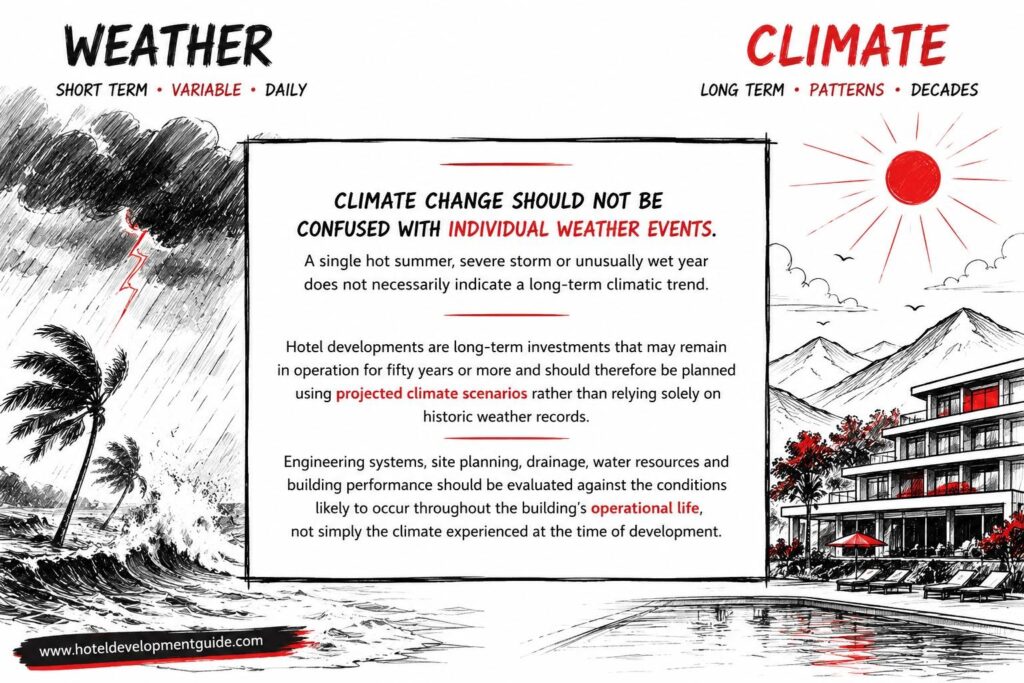
Planning Hotels for a Changing Climate
Climate change is increasingly influencing the way hotels are planned long before detailed architectural or engineering design begins. Decisions made during the master planning stage determine how the hotel responds to its local environment, affecting energy consumption, guest comfort, operational efficiency and long-term resilience. A well-planned hotel can take advantage of natural climatic conditions, while poor planning may increase operating costs and create problems that are difficult or expensive to correct later.
Planning for a changing climate does not necessarily require complex or expensive solutions. Many of the most effective strategies involve careful consideration of building orientation, site layout, landscaping and the relationship between indoor and outdoor spaces. By integrating climate-responsive planning from the outset, developers can improve guest comfort, reduce reliance on mechanical systems and create hotels that are better prepared for future climatic conditions. Many of these planning principles also support internationally recognised environmental certification systems such as LEED and BREEAM, while the occupant-focused principles of the WELL Building Standard are discussed later in this guide. These broader topics are explored in greater detail in the Environmental Design section of the Hotel Development Guide.
Orientating the Hotel for Solar Gain and Prevailing Winds
The orientation of a hotel has a significant influence on its long-term environmental performance. Positioning the building to minimise unwanted solar gain while maximising natural daylight can reduce cooling loads, improve guest comfort and lower energy consumption. At the same time, taking advantage of prevailing winds can improve natural ventilation in suitable climates and reduce dependence on mechanical cooling.
Orientation should also consider the differing requirements of guestrooms, public areas, restaurants and outdoor facilities. Balancing views, daylight, privacy and thermal performance often requires compromise, but climate-responsive orientation can provide lasting operational benefits throughout the life of the hotel.
Designing Comfortable Outdoor Spaces
Outdoor spaces have become an increasingly important component of the guest experience, particularly in resorts, mixed-use developments and leisure destinations where terraces, restaurants, swimming pools, event spaces and landscaped gardens form a significant part of the hotel’s commercial offering. Climate change, however, is reducing the number of hours during which these areas remain comfortably usable. Higher temperatures, more frequent heatwaves, and greater exposure to solar radiation require that outdoor environments be planned with the same level of technical consideration as internal spaces if they are to remain attractive and commercially successful throughout the year.
Master planning should therefore consider creating comfortable outdoor microclimates rather than simply allocating external spaces around the site. Building orientation, prevailing wind patterns, solar studies, seasonal shading, topography and landscape design all influence outdoor temperatures and user comfort. Pergolas, colonnades, mature tree planting, water features and carefully positioned buildings can provide shade and encourage natural air movement, while paving materials, façade colours, and surface finishes should be selected to reduce heat absorption and minimise the urban heat island effect. Digital modelling and solar analysis can help predict how outdoor spaces will perform at different times of day and throughout the year, enabling designers to optimise comfort before construction begins.
Well-designed outdoor environments improve far more than guest comfort. Comfortable external spaces encourage longer dwell times, increase use of restaurants, bars, and leisure facilities, improve the commercial performance of outdoor event venues, and reduce reliance on energy-intensive cooling systems. By integrating climate-responsive landscape architecture with master planning and environmental engineering, developers can create outdoor environments that remain functional, resilient and commercially valuable despite increasingly challenging climatic conditions.
Landscape Design as Climate Infrastructure
Landscaping is often viewed primarily as an aesthetic feature, but it also plays an important role in helping hotels adapt to changing climatic conditions. Trees and planting can reduce surface temperatures, provide shade, slow stormwater runoff and improve biodiversity, while carefully selected planting schemes can reduce irrigation requirements in areas facing increasing water stress.
Developers should consider landscape design as part of the hotel’s environmental infrastructure rather than an element added after construction. Integrating climate-appropriate planting, permeable surfaces and sustainable irrigation strategies into the master plan can improve resilience while enhancing the guest experience.
Planning for Water and Stormwater Management
Changing rainfall patterns are creating new challenges for many hotel developments. While some regions are experiencing longer periods of drought, others are facing increasingly intense rainfall events that place greater pressure on drainage infrastructure and increase the risk of surface flooding. Traditional drainage systems designed using historical rainfall data may no longer provide sufficient capacity as weather patterns become more variable. Climate-responsive master planning should therefore consider not only today’s rainfall characteristics but also projected future precipitation over the hotel’s operational life.
Master planning should consider how water moves across the site during both normal and extreme weather events. Natural drainage routes, finished ground levels, flood pathways and the location of critical infrastructure should all be evaluated before finalising the site layout. Rather than attempting to remove stormwater as quickly as possible, modern approaches increasingly seek to slow, store and manage runoff using Sustainable Drainage Systems (SuDS), including retention ponds, detention basins, bioswales, rain gardens, permeable paving and underground attenuation tanks. These measures reduce peak flows, lower flood risk and often improve water quality before discharge into the surrounding environment.
Stormwater management should also be integrated with the overall landscape strategy rather than treated as a separate engineering discipline. Open-water features, planted swales, wetlands, and multifunctional green spaces can simultaneously manage rainfall, improve biodiversity, reduce urban heat island effects, and create attractive outdoor environments for guests. By combining civil engineering with landscape architecture and environmental planning, developers can create hotel sites that are more resilient, visually appealing and better able to accommodate increasingly variable climatic conditions.
Creating Flexible and Adaptable Hotel Developments
Climate conditions, guest expectations and building technologies will continue to evolve throughout the lifespan of a hotel. As a result, master plans should provide sufficient flexibility to accommodate future improvements without requiring major structural alterations or operational disruption.
Allowing space for additional renewable energy systems, future plant upgrades, electric vehicle charging, expanded landscaping or water management infrastructure can make adaptation simpler and more cost-effective. Planning for flexibility recognises that climate resilience is not achieved through a single design decision but through creating hotels that can continue to adapt as conditions change over time.
Designing Building Services for Future Climate Conditions
Building services are among the most climate-sensitive elements of any hotel development. Heating, ventilation, air conditioning, electrical systems, water services and vertical transportation all depend on assumptions about how a building will be used and the environmental conditions in which it will operate. As climate patterns evolve, many of those assumptions are changing, requiring hotel developers and engineers to design systems that remain efficient, reliable and adaptable throughout the building’s operational life.
Designing building services for future climate conditions is about more than simply installing larger air conditioning systems. It requires an integrated approach that considers building performance, energy efficiency, resilience and operational flexibility. Well-designed engineering systems should provide comfortable conditions for guests and staff while minimising energy consumption, supporting sustainability objectives and allowing future upgrades as technologies and climatic conditions continue to evolve.
Designing for Increasing Cooling Demand
In many parts of the world, cooling has become one of the fastest-growing energy demands within hotels. Rising summer temperatures, longer heatwaves and increasing guest expectations for thermal comfort are placing greater pressure on air conditioning systems, particularly in regions where cooling was previously considered a secondary design consideration.
Rather than simply increasing plant capacity, developers should first reduce cooling demand through good architectural design, high-performance glazing, effective insulation, external shading and careful building orientation. Once passive measures have been optimised, mechanical cooling systems can be designed more efficiently, reducing both capital investment and long-term operating costs.
Flexible Mechanical and Electrical Infrastructure
Hotels frequently undergo refurbishment during their operational life, and building services may need upgrading as equipment becomes more efficient or climatic conditions change. Designing mechanical and electrical infrastructure with sufficient flexibility can simplify future improvements while reducing disruption to hotel operations.
Providing adequate plant space, accessible service routes and spare electrical capacity allows systems to evolve without major structural alterations. Future-proofing infrastructure can also support the later installation of technologies such as battery storage, additional renewable energy generation or more efficient heating and cooling equipment.
Energy Efficiency and Smart Building Controls
Hotels are among the most energy-intensive building types because they operate continuously while accommodating highly variable occupancy and demand patterns. Guestrooms, restaurants, kitchens, conference facilities, spas, swimming pools, laundries and back-of-house operations all have different heating, cooling, ventilation and lighting requirements that fluctuate throughout the day. Climate change is increasing this complexity as hotter weather extends cooling seasons, increases peak electrical demand and places greater pressure on mechanical building services.
Modern Building Management Systems (BMS) enable hotel operators to monitor and optimise these complex engineering systems in real time. Rather than operating equipment at fixed settings, intelligent controls can adjust chilled water temperatures, air handling units, ventilation rates, guestroom air conditioning, domestic hot water production and lighting according to occupancy levels, weather forecasts and operational requirements. For example, guestrooms can automatically enter energy-saving mode when unoccupied, conference facilities can increase fresh air only when events are taking place, and swimming pool heating can be adjusted according to seasonal demand. These strategies reduce energy consumption while maintaining guest comfort and operational efficiency.
The next generation of smart hotels is increasingly incorporating artificial intelligence and predictive building analytics to further optimise performance. AI-assisted systems can forecast occupancy levels, anticipate periods of extreme weather, identify inefficient equipment before failures occur and optimise energy purchasing where variable electricity tariffs apply. Continuous monitoring of plant performance, energy consumption, and indoor environmental conditions enables engineers to move from reactive maintenance to predictive asset management, extending equipment life, reducing operating costs, and improving the overall resilience of hotel building services throughout the asset’s operational life.
Electrical Resilience and Energy Security
Hotels rely on continuous electrical supplies to support almost every aspect of their operations, including guestroom air conditioning, domestic hot water production, kitchens, refrigeration, lifts, lighting, security systems, communications, fire protection, data networks, and building management systems. Climate change is increasing the risk of temporary power interruptions in many regions through more frequent storms, flooding, wildfires, extreme heat and increasing pressure on electricity networks during periods of peak demand. Even relatively short power outages can significantly disrupt hotel operations, reduce guest satisfaction and result in financial losses.
Electrical resilience should therefore be considered as an integral part of hotel development rather than simply an engineering requirement. Critical systems such as emergency lighting, fire detection, life safety equipment, guest communications, security systems, lifts serving evacuation routes, and essential kitchen and refrigeration equipment may all require different levels of electrical resilience depending on the hotel’s operational requirements. Resort hotels may also need to maintain swimming pool circulation, water supply systems, wastewater treatment facilities and medical or accessibility equipment during prolonged power interruptions to protect both guest safety and operational continuity.
Modern resilient electrical strategies increasingly combine standby generators, battery energy storage systems, renewable energy generation, intelligent load management and resilient electrical distribution networks. Building Management Systems can prioritise critical services, shed non-essential electrical loads and optimise available power during emergencies, while future AI-assisted energy management may further improve resilience by forecasting peak demand, integrating weather forecasts and balancing energy use across the property. By designing for both climate resilience and operational continuity, developers can reduce business interruption, protect guest experience and improve the long-term reliability of hotel assets.
Designing for Adaptability
The engineering systems installed today are unlikely to remain unchanged throughout a hotel’s life. New technologies, changing regulations and evolving climatic conditions will continue to influence how hotels consume and manage energy, water and other resources. Advances in building management systems, sensors, predictive maintenance, and artificial intelligence are already improving how hotels monitor and optimise building performance, with even greater levels of automation and intelligent control expected in the years ahead.
Developers should therefore avoid designing building services solely around current requirements. Creating adaptable engineering systems that can accommodate future technologies and changing operational demands helps protect long-term asset value while reducing the cost and complexity of future refurbishments. Future building management systems may increasingly use artificial intelligence to balance heating, cooling, ventilation, lighting, battery storage, and renewable energy generation based on occupancy, weather forecasts, energy prices, and grid demand, improving both operational efficiency and resilience. Climate resilience is therefore not simply about today’s equipment but about ensuring that hotels remain capable of adapting to tomorrow’s technologies as well as tomorrow’s climate.
Human Comfort in Hotels in a Changing Climate
The primary purpose of any hotel is to provide a comfortable, safe and enjoyable environment for its guests while creating a productive and healthy workplace for its employees. Climate change is making this objective increasingly challenging, as higher temperatures, more frequent heatwaves, changing humidity levels, and poorer outdoor air quality affect the internal environments of hotel buildings. Creating hotels that remain comfortable under a wider range of climatic conditions is therefore becoming a fundamental design objective rather than simply an operational consideration.
Human comfort depends upon far more than air temperature alone. Thermal comfort, indoor air quality, natural daylight, acoustics, water quality, access to nature and overall well-being all influence how guests experience a hotel and how effectively employees are able to work within it. These principles are reflected in the WELL Building Standard, which complements environmental certification systems such as LEED and BREEAM by focusing specifically on the health, comfort and wellbeing of building occupants. Many of the design approaches that improve climate resilience also contribute towards creating healthier, more comfortable hotels.
Thermal Comfort Beyond Air Conditioning
Maintaining comfortable indoor temperatures is becoming one of the greatest challenges facing hotel developers. While air conditioning remains an important part of modern hotel engineering, thermal comfort should not depend solely upon mechanical cooling. Building orientation, insulation, external shading, glazing performance, thermal mass and natural ventilation all influence how comfortable a building remains during periods of hot weather while reducing dependence on energy-intensive cooling systems.
Guest expectations continue to rise regardless of external weather conditions. Travellers increasingly expect comfortable bedrooms, pleasant public spaces and usable restaurants, meeting rooms and leisure facilities throughout the year. Hotels that consistently maintain comfortable internal conditions are more likely to achieve higher guest satisfaction, stronger online reviews and greater customer loyalty, while reducing operational costs through more efficient building performance.
Indoor Air Quality and Healthy Buildings
As buildings become increasingly airtight to improve energy efficiency, maintaining high indoor air quality becomes even more important. Ventilation systems must provide sufficient fresh air while controlling humidity, airborne pollutants and carbon dioxide concentrations. Poor indoor air quality may affect sleep quality, guest comfort and employee wellbeing, particularly during periods when buildings remain closed to external ventilation.
Modern engineering systems increasingly combine filtration, intelligent ventilation controls and continuous environmental monitoring to maintain healthy internal conditions. These technologies not only improve guest comfort but can also reduce operational issues associated with condensation, mould growth and excessive humidity, contributing to healthier and more resilient hotel environments.
Natural Light, Solar Control and Visual Comfort
Natural daylight is widely recognised as improving wellbeing, supporting circadian rhythms and creating more attractive internal spaces. Hotels often seek to maximise natural light within guestrooms, restaurants, lobbies and meeting areas to improve the overall guest experience and reduce dependence on artificial lighting.
However, climate change requires developers to balance daylight with effective solar control. Larger glazed façades that perform well in cooler climates may contribute to excessive solar gain and glare during hotter periods if not carefully designed. Appropriate glazing specifications, external shading devices and thoughtful building orientation enable hotels to benefit from natural daylight while maintaining comfortable internal temperatures and reducing cooling loads.
Biophilic Design and Connection with Nature
Guests increasingly value hotels that provide a connection with the surrounding natural environment. Gardens, courtyards, terraces, natural materials and carefully designed planting schemes contribute not only to the visual appeal of a hotel but also to feelings of relaxation, wellbeing and recovery. These principles have become particularly important as urbanisation increases and guests seek environments that offer both comfort and a sense of escape.
Climate-responsive landscape design can reinforce these benefits while improving environmental performance. Native planting, shaded outdoor areas, green roofs and biodiversity-friendly landscapes can reduce local temperatures, improve stormwater management and reduce irrigation requirements while strengthening the hotel’s sense of place. Well-designed outdoor environments therefore contribute simultaneously to guest wellbeing, operational resilience and environmental sustainability.
Staff Wellbeing and Workplace Comfort
Hotel employees spend considerably more time within the building than most guests, making their working environment an equally important consideration. Housekeeping staff, engineers, chefs, food and beverage teams, maintenance personnel, landscapers and pool attendants may all be exposed to increasingly demanding conditions during periods of extreme heat, particularly in kitchens, laundries, roof plant rooms and outdoor work areas. As climate change increases the frequency and intensity of heatwaves, protecting employee health, safety and productivity is becoming an important element of hotel design rather than simply an operational responsibility.
Climate-responsive hotels should therefore incorporate staff wellbeing into the earliest stages of planning and design. Staff facilities should provide effective cooling, good ventilation, drinking water, shaded outdoor rest areas where appropriate and changing facilities that enable employees to recover from physically demanding work. Back-of-house areas, which have traditionally received less design attention than guest spaces, should be planned to achieve comfortable working temperatures through appropriate insulation, ventilation, daylight, solar control and efficient mechanical systems. Reducing heat gains in kitchens, laundries, and engineering spaces not only improves working conditions but also reduces energy consumption and enhances equipment performance.
Protecting workplace comfort also benefits hotel operations. Employees working in comfortable environments are generally better able to maintain productivity, deliver consistent service standards and reduce the likelihood of fatigue-related errors or accidents. As labour shortages continue to affect many hospitality markets, providing healthy and comfortable workplaces may also improve staff recruitment, retention and job satisfaction. Climate-responsive hotel development should therefore support the well-being of everyone who uses the building, recognising that resilient hotels depend as much on healthy, productive employees as on satisfied guests.
The WELL Building Standard and Climate-Responsive Hotels
The WELL Building Standard provides an internationally recognised framework for creating buildings that support human health, comfort and wellbeing. Unlike certification systems that focus primarily on environmental performance or resource efficiency, WELL places particular emphasis on the experience of building occupants through areas such as thermal comfort, indoor air quality, water quality, lighting, acoustics, movement and mental wellbeing.
Although WELL is not specifically a climate change certification system, many of its principles align closely with climate-responsive hotel development. Designing buildings that remain comfortable during changing climatic conditions while supporting the health and wellbeing of guests and employees creates hotels that are not only more resilient but also more attractive places to stay and work. For hotel developers, integrating these principles alongside broader environmental standards can help deliver buildings that perform successfully both commercially and environmentally throughout their operational life.
Relationship Between the WELL Building Standard and Climate-Responsive Hotel Development
| WELL Concept | Climate Change Consideration | Example in Hotel Development |
|---|---|---|
| Air | Maintaining healthy indoor air as buildings become more airtight and periods of poor outdoor air quality become more frequent. | High-efficiency filtration, demand-controlled ventilation, CO₂ monitoring, humidity control and continuous indoor air quality monitoring. |
| Water | Protecting water quality while improving resilience to water scarcity and changing supply conditions. | Water filtration, greywater treatment, efficient plumbing fixtures, water quality monitoring and responsible water management. |
| Thermal Comfort | Maintaining comfortable internal environments during hotter summers and more frequent heatwaves while reducing energy demand. | High-performance façades, external shading, adaptive HVAC systems, individual guestroom temperature controls and passive cooling strategies. |
| Light | Maximising natural daylight while controlling solar gain, glare and overheating. | High-performance glazing, daylight-responsive lighting controls, external shading devices and careful building orientation. |
| Movement | Ensuring indoor and outdoor facilities remain comfortable and usable despite changing climatic conditions. | Covered walkways, shaded terraces, naturally ventilated circulation spaces and climate-responsive recreation areas. |
| Sound | Maintaining guest comfort as buildings rely more heavily on mechanical ventilation and cooling systems. | Acoustic glazing, quieter HVAC equipment, façade design and effective zoning of guestrooms and public areas. |
| Materials | Selecting durable, low-emission materials capable of performing under changing climatic conditions. | Corrosion-resistant finishes, low-VOC materials, resilient external cladding and longer-life construction components. |
| Mind | Supporting guest wellbeing and reducing stress associated with heat, poor air quality and increasingly urban environments. | Quiet guestrooms, biophilic design, natural views, shaded gardens and restorative outdoor spaces. |
| Community | Designing hotels that remain resilient for guests, employees and surrounding communities during changing environmental conditions. | Staff welfare facilities, emergency planning, accessible public spaces and responsible environmental management. |
Water Management in a Changing Climate
Water has always been one of the hospitality industry’s most important resources, but climate change is increasing the need for careful water management throughout the hotel development process. Many destinations are experiencing changing rainfall patterns, more frequent droughts or growing pressure on municipal water supplies, while others face periods of intense rainfall that place additional demands on drainage infrastructure. As a result, water management is becoming an increasingly important consideration during hotel planning, design and long-term operations.
Hotels typically consume significant quantities of water through guestrooms, food and beverage operations, spas, swimming pools, landscaping and back-of-house facilities. Incorporating efficient water management strategies from the earliest stages of development can reduce operating costs, improve environmental performance and strengthen long-term resilience. Many of these measures also contribute towards sustainability certification schemes such as LEED, BREEAM and WELL, while supporting responsible resource management and improving the long-term viability of hotel developments.
Understanding Long-Term Water Availability
The availability of reliable water supplies should be considered during the site selection and feasibility stages of every hotel project. While many developments rely on municipal water networks, others may depend on groundwater, reservoirs, desalination plants or private supplies, each with its own long-term risks and operational considerations.
Developers should assess not only current water availability but also future demand, regional climate projections and the resilience of local infrastructure. A destination that currently has adequate water resources may experience increasing pressure over the coming decades as populations grow, tourism expands and climate patterns continue to change.
Reducing Water Consumption Through Design
The most sustainable water is often the water that never needs to be supplied, heated, pumped, treated or discharged. Careful planning and specification can significantly reduce water consumption throughout a hotel without affecting guest comfort or service standards. As climate change places increasing pressure on water resources in many destinations, reducing demand through intelligent design is becoming as important as securing reliable water supplies.
Opportunities for water efficiency exist throughout the hotel. Guest bathrooms can incorporate low-flow showers, dual-flush toilets, sensor-operated taps and pressure-controlled fittings that reduce consumption while maintaining user comfort. Kitchens can utilise water-efficient dishwashers, pre-rinse spray valves and food preparation equipment designed to minimise water use, while commercial laundries can recover and recycle rinse water, optimise wash cycles according to load size and install high-efficiency washing machines that significantly reduce both water and energy consumption. Swimming pools may incorporate automatic level controls, leak detection systems and high-quality covers that reduce evaporation, particularly in hotter climates where water losses can be substantial.
Water demand should also be considered across the wider hotel site. Intelligent irrigation systems that respond to soil moisture and weather forecasts can prevent unnecessary watering, while rainwater harvesting and greywater recycling may provide suitable water for irrigation, toilet flushing and certain maintenance activities where local regulations permit. Condensate recovered from air conditioning systems can also be collected and reused, particularly in hot, humid climates where large volumes may be generated during the cooling season. By integrating these measures during the design stage, developers can reduce operating costs, improve resilience during periods of water scarcity and create hotels that are better prepared for the changing climatic conditions expected throughout their operational life.
Examples of Water-Efficient Design Strategies in Hotels
| Hotel Area | Design Strategy | Climate Change Benefit |
|---|---|---|
| Guest Bathrooms | Install low-flow showers, dual-flush WCs, aerated taps and pressure-controlled fittings. | Reduces potable water consumption and the energy required to heat domestic hot water without compromising guest comfort. |
| Guestroom Design | Replace bathtubs with high-quality showers where appropriate and specify water-efficient bathroom fixtures. | Reduces water demand per occupied room while lowering hot water consumption and associated energy use. |
| Commercial Laundry | Install high-efficiency washing machines, rinse-water recovery systems and load optimisation controls. | Significantly reduces water and energy consumption while lowering operating costs and extending equipment life. |
| Commercial Kitchens | Specify water-efficient dishwashers, pre-rinse spray valves and low-consumption food preparation equipment. | Reduces water demand in one of the hotel’s highest-consumption operational areas without affecting food service quality. |
| Swimming Pools and Spas | Install pool covers, automatic level controls, efficient filtration systems and leak detection. | Minimises evaporation losses, reduces make-up water requirements and improves operational efficiency, particularly during hotter summers. |
| Landscape Irrigation | Use drought-tolerant planting, soil-moisture sensors, weather-based irrigation controls and drip irrigation. | Reduces irrigation demand while maintaining attractive landscapes during periods of drought and water restrictions. |
| Alternative Water Sources | Incorporate rainwater harvesting, greywater recycling and, where appropriate, condensate recovery from air-conditioning systems. | Reduces dependence on potable water supplies and improves resilience during periods of water scarcity. |
| Water Monitoring | Install sub-metering, smart leak detection and Building Management System (BMS) monitoring of major water consumers. | Identifies abnormal consumption quickly, enabling proactive maintenance and reducing water losses. |
| Building Services Design | Design hot water systems with short pipe runs, efficient circulation and demand-controlled recirculation pumps. | Reduces water wasted while waiting for hot water and lowers energy consumption throughout the building. |
| Master Planning | Integrate Sustainable Drainage Systems (SuDS), permeable paving and water-sensitive landscape design. | Reduces stormwater runoff, supports groundwater recharge and improves resilience to both droughts and extreme rainfall. |
Landscape Design and Irrigation
Landscaping is often one of the largest water consumers in resort developments, particularly in regions with hotter summers and longer dry seasons. Selecting climate-appropriate planting and designing efficient irrigation systems can significantly reduce long-term water demand while maintaining attractive outdoor environments. Landscape planning should respond to local environmental conditions rather than applying the same design approach across destinations.
Large areas of closely maintained grass lawns, while visually appealing, may require substantial irrigation and ongoing maintenance, particularly in regions where turf grass is not native or naturally suited to the local climate. Instead, developers should consider native and drought-tolerant planting schemes that reflect the destination’s character while reducing water consumption and improving biodiversity. Careful landscape planning can create distinctive hotel environments that are both more sustainable and more authentic, reducing maintenance costs while strengthening the hotel’s sense of place.
Rainwater Harvesting and Water Reuse
Climate change is encouraging developers to view water as a valuable resource rather than a disposable utility. Rainwater harvesting systems can capture water for irrigation, landscape maintenance or other non-potable uses, reducing demand on municipal supplies during suitable periods.
Greywater recycling systems provide further opportunities by treating water from showers and washbasins for reuse in toilet flushing, irrigation and other appropriate applications. Although these systems require additional capital investment and maintenance, they can contribute significantly to long-term water resilience, particularly in water-stressed regions.
Designing for Both Drought and Flooding
Climate change is creating contrasting challenges for hotel developments. Many destinations are experiencing longer periods of drought, while others are facing more intense rainfall events that increase the risk of localised flooding and place greater pressure on drainage systems.
Successful water management therefore requires planning for both extremes. Sustainable drainage systems, permeable paving, retention ponds and carefully designed site grading can help manage heavy rainfall, while efficient water storage and conservation measures improve resilience during dry periods. Considering both scenarios during the planning stage helps create hotel developments that are better prepared for increasingly variable weather conditions.
Water as a Strategic Asset
Traditionally, water has often been viewed as an operational utility, available whenever required. Climate change is encouraging developers to adopt a different perspective, recognising water as a strategic resource that influences operational resilience, environmental performance and long-term commercial success.
Hotels that manage water efficiently are likely to benefit from lower operating costs, greater resilience during periods of scarcity and stronger environmental credentials. As climate conditions continue to evolve, effective water management is becoming not simply an environmental objective but an essential component of responsible hotel development and long-term asset protection.
Building for Resilience and Long-Term Value
Climate resilience should be viewed as a long-term investment rather than simply an additional construction cost. Hotels are expected to operate for many decades, and relatively small decisions made during design and construction can significantly influence maintenance costs, operational efficiency, refurbishment requirements and asset value throughout the building’s life. Investing in resilient construction at the outset can often reduce future expenditure while improving the hotel’s ability to adapt to changing climatic conditions.
Developers are increasingly evaluating projects using whole-life cost principles rather than focusing solely on initial capital expenditure. While resilient construction measures may increase upfront costs in some cases, they can also reduce insurance claims, minimise disruption to operations, extend the life of building components and improve long-term investment performance.
Investing Beyond Initial Construction Costs
Construction budgets naturally place pressure on developers to control capital expenditure, particularly as labour and material costs continue to rise. However, reducing initial expenditure without considering the building’s operational life can often prove to be a false economy. Decisions that save relatively modest amounts during construction may result in significantly higher maintenance costs, increased energy consumption or expensive refurbishment programmes many years later.
Developers should therefore evaluate construction decisions using whole-life cost analysis rather than simply comparing initial prices. High-performance glazing, durable roofing systems, corrosion-resistant materials and improved waterproofing may increase capital costs but frequently deliver financial benefits through lower maintenance requirements, reduced operating costs and longer replacement cycles. Over the lifespan of a hotel, these savings can substantially outweigh the additional initial investment.
Designing Buildings That Can Be Adapted
Hotels evolve continuously throughout their operational life. Guest expectations change, technology advances, building regulations are updated and hotel operators regularly refurbish properties to remain competitive. Climate change adds another layer of uncertainty, increasing the likelihood that engineering systems and building components will require modification or upgrading during the hotel’s lifetime.
Planning for adaptability enables future improvements to be undertaken with less disruption and lower cost. Providing generous plant areas, accessible service routes, sufficient electrical capacity and space for future engineering equipment allows hotels to adopt emerging technologies without major structural alterations. This flexibility protects the long-term usefulness of the building while making future investment decisions both simpler and more economical.
Selecting Durable Materials for Changing Conditions
Building materials are increasingly being exposed to environmental conditions that may be more demanding than those anticipated when the hotel was designed. Higher temperatures, more intense ultraviolet radiation, heavier rainfall, stronger winds and greater humidity can all influence the durability and maintenance requirements of external building components.
Material selection should therefore consider expected future conditions rather than relying solely on historical climate data. Durable façades, corrosion-resistant fixings, high-quality waterproofing systems and finishes suited to local environmental conditions can significantly reduce maintenance requirements throughout the hotel’s life. Appropriate material selection also improves operational reliability by reducing the likelihood of premature deterioration and unplanned repairs.
Protecting Long-Term Asset Value
Climate resilience is becoming an increasingly important consideration for investors, lenders and hotel owners because it directly influences the long-term performance of hotel assets. Hotels that are well prepared for changing climatic conditions are generally better positioned to maintain operational continuity, control maintenance costs, and protect guest satisfaction throughout their operational life. As investment horizons lengthen, developers are also becoming increasingly aware of the potential risk of creating stranded assets, properties that are no longer able to compete effectively because they cannot adapt economically to changing environmental conditions, operational requirements or evolving regulatory standards.
Protecting long-term asset value, therefore, requires more than designing a hotel that performs well today. Developers should also consider the building’s adaptive capacity, its ability to respond to changing climatic conditions, emerging technologies, evolving regulations and shifting guest expectations throughout its operational life. Flexible engineering systems, accessible service routes, generous plant areas, adaptable building management systems and resilient infrastructure all make future improvements simpler, less disruptive and more cost-effective.
Hotels requiring significant future adaptation may become less attractive to investors as refurbishment costs increase, insurance premiums rise and operational risks become more apparent. In some locations, climate-related challenges may accelerate the risk of assets becoming commercially obsolete or economically difficult to operate. By incorporating resilience, adaptability and future-proofing into the original development strategy, developers can protect not only the physical building but also its commercial competitiveness, financing potential and long-term market value throughout its lifecycle.
Operating Hotels in a Changing Climate
Climate change continues to influence hotel operations long after construction is complete. Rising temperatures, changing weather patterns and increasing pressure on natural resources affect almost every aspect of hotel management, from energy consumption and maintenance to staffing, guest services and operational planning. As climatic conditions evolve, operators are increasingly required to adapt established procedures while maintaining the standards of comfort and service expected by guests.
Hotels that successfully respond to these operational challenges are likely to improve efficiency, reduce costs and strengthen guest satisfaction. Many operational adaptations require relatively modest investment but can deliver significant long-term benefits when supported by good planning, effective management and modern technology.
Managing Increasing Energy Demand
Higher temperatures are increasing demand for cooling in many parts of the world, making energy consumption one of the fastest-growing operational costs for many hotels. Air conditioning, refrigeration, ventilation and chilled water systems require significant amounts of electricity, particularly during periods of peak occupancy when guestrooms, restaurants, meeting facilities and leisure amenities are operating simultaneously. As hotter summers become more common, these demands are expected to continue increasing.
Managing this growth requires more than simply installing efficient equipment. Intelligent building management systems can optimise heating, cooling, ventilation and lighting according to occupancy, weather conditions and operational requirements, while preventative maintenance ensures systems continue operating at peak efficiency. Careful energy management reduces operating costs while helping hotels maintain comfortable conditions for guests throughout the year.
Maintaining Guest Comfort Throughout the Year
Guest expectations continue to evolve as climate conditions change. Comfortable indoor temperatures, reliable hot water, good indoor air quality and attractive outdoor spaces are increasingly regarded as fundamental components of the guest experience. Hotels that fail to provide comfortable environments during periods of extreme weather may experience lower guest satisfaction, weaker online reviews and increased requests for compensation or room changes.
Operational teams therefore need procedures that extend beyond routine maintenance. During periods of extreme heat or severe weather, additional attention may be required for cooling systems, swimming pools, outdoor furniture, shading devices and landscaped areas. Maintaining guest comfort increasingly depends upon effective coordination between engineering, housekeeping, front office and operational management.
Adapting Maintenance and Asset Management
Changing climatic conditions can accelerate the deterioration of buildings and engineering systems. Higher temperatures may increase wear on cooling equipment, while heavier rainfall can place additional demands on drainage systems, roofs and waterproofing. Landscaped areas may also require different maintenance practices as weather patterns become less predictable.
Hotels should therefore review maintenance strategies regularly rather than relying solely on historic maintenance schedules. Predictive maintenance technologies, condition monitoring and data collected through modern building management systems can help engineering teams identify developing problems before they result in equipment failure or disruption to hotel operations. A proactive approach generally reduces long-term costs while extending the life of major assets.
Supporting Staff and Operational Resilience
Climate change affects hotel employees as well as guests. Engineering teams may spend longer maintaining cooling systems during periods of high demand, while housekeeping, landscaping and food and beverage staff may experience increasingly challenging working conditions during hotter weather. Protecting staff welfare is therefore becoming an important operational consideration.
Hotels should review staffing practices, work schedules, hydration facilities, shaded rest areas and training procedures to ensure employees can continue working safely and efficiently during periods of extreme weather. Supporting staff wellbeing not only fulfils an important duty of care but also helps maintain service quality, reduce absenteeism and improve operational resilience.
Preparing for Future Operational Challenges
Hotel operations will continue evolving as climate, technology and guest expectations change. Artificial intelligence, advanced building management systems, predictive maintenance and real-time monitoring are already beginning to improve the efficiency with which hotels manage energy, water and engineering systems. These technologies are expected to play an increasingly important role in helping hotels respond dynamically to changing environmental conditions.
Successful hotel operators will therefore combine good operational management with continuous investment in technology, staff training and building performance. Climate resilience is not achieved through a single operational procedure but through an ongoing commitment to monitoring, adaptation and continuous improvement, ensuring hotels remain commercially competitive throughout their operational life.
Climate Risk, Investment and Insurance
Climate change is becoming an increasingly important consideration for investors, lenders, insurers and hotel owners when evaluating new hotel developments and existing assets. While traditional investment criteria such as location, market demand and financial performance remain fundamental, climate-related risks are increasingly influencing financing decisions, insurance availability and long-term asset valuations. Understanding these risks during the development process enables more informed investment decisions and helps protect long-term commercial performance.
Climate risk should not be viewed solely as an environmental issue. It is increasingly becoming a financial consideration that influences project viability, borrowing costs, insurance premiums and future resale value. Hotels that demonstrate resilience to changing climatic conditions are likely to become more attractive to investors seeking stable, long-term returns from hospitality assets.
Climate Change Risks to Hotel Assets
| Climate Change Risk | Climate Change Consideration | Potential Business Impact |
|---|---|---|
| Flooding | More frequent and intense rainfall, storm surges and rising sea levels may increase the frequency and severity of flooding, particularly in coastal, riverside and low-lying developments. | Damage to buildings and infrastructure, business interruption, guest displacement, higher insurance premiums, increased repair costs and potential loss of revenue during closures. |
| Extreme Heat | Longer, hotter summers and more frequent heatwaves increase cooling demand while placing greater stress on building services and engineering systems. | Higher energy costs, accelerated equipment wear, reduced guest comfort, increased maintenance requirements and potential damage to reputation if indoor conditions become unacceptable. |
| Water Scarcity | Reduced rainfall, prolonged droughts and increased competition for water resources may affect hotel operations, particularly in resort destinations. | Restrictions on swimming pools, irrigation of golf courses and landscaped gardens, increased water costs, reduced guest satisfaction and possible limitations on future expansion. |
| Storm Damage | More intense storms, stronger winds and heavier rainfall can increase the risk of structural damage, roof failures and disruption to essential services. | Increased maintenance and repair costs, temporary closure, higher insurance claims, operational disruption and greater capital expenditure on resilient construction. |
| Wildfire | Rising temperatures, prolonged dry periods and changing vegetation patterns are increasing wildfire risk in many regions. Smoke may also affect hotels located some distance from active fires. | Property damage, evacuation, poor air quality affecting guests, cancelled bookings, increased insurance costs and damage to destination appeal. |
| Coastal Erosion and Sea Level Rise | Rising sea levels and changing coastal processes may accelerate erosion and increase the vulnerability of beachfront developments over time. | Loss of usable land, increased expenditure on coastal protection, planning restrictions, declining asset values and potential long-term viability concerns. |
| Changing Regulations | Governments may introduce stricter environmental, water management, energy efficiency or climate adaptation requirements as climate risks increase. | Additional capital expenditure, operational restrictions, compliance costs, refurbishment requirements and potential limitations on the use of key hotel facilities. |
| Insurance Availability and Cost | Insurers are increasingly assessing climate-related risks when determining policy availability, exclusions and premium levels. | Higher insurance premiums, reduced insurance availability in high-risk locations, increased deductibles and greater financing challenges for some developments. |
| Stranded Asset Risk | Hotels that cannot be economically adapted to changing climatic conditions, evolving regulations or changing guest expectations may become less competitive over time. | Reduced market value, declining investment attractiveness, higher refurbishment costs, reduced financing opportunities and increased risk of long-term commercial obsolescence. |
Climate Risk and Hotel Investment
Institutional investors and hotel owners are increasingly assessing how climate-related risks may influence the long-term performance of hospitality assets. Hotels are typically developed with investment horizons measured in decades, making future environmental conditions an important part of investment due diligence. Physical risks such as flooding, water scarcity or rising cooling costs can affect operational performance, while regulatory changes may require additional investment throughout the life of the building.
Developers who identify and address these risks during planning are generally better positioned to demonstrate the long-term resilience of their projects. Incorporating climate adaptation into feasibility studies and investment appraisals provides greater confidence that the hotel can continue operating successfully under changing environmental conditions while protecting long-term returns.
Insurance in a Changing Climate
Insurance has traditionally been viewed as a routine operational cost, but changing climatic conditions are increasing its strategic importance within hotel development. More frequent extreme weather events and greater awareness of environmental risks are influencing how insurers assess exposure and determine premiums for new developments.
Developers should therefore consider insurance implications during the planning stage rather than after construction has been completed. Selecting appropriate sites, incorporating resilient design features and reducing exposure to recognised risks may improve insurability while helping to control long-term operating costs. Hotels that demonstrate robust risk management may also be better positioned as insurance markets continue to evolve.
Climate Risk and Hotel Valuation
Climate resilience is increasingly influencing the long-term value of hotel assets. Investors are recognising that buildings requiring extensive future adaptation may face higher operating costs, greater capital expenditure and reduced competitiveness when compared with more resilient developments. Consequently, climate performance is becoming one of several factors considered when evaluating long-term investment quality.
The concept of the stranded asset is becoming increasingly relevant within real estate. Hotels that cannot be economically adapted to changing climatic conditions, new regulations or evolving guest expectations may experience declining commercial performance over time. Designing for resilience from the outset helps protect both the physical asset and its long-term market value.
Building Climate Resilience
Climate resilience is achieved through a combination of good planning, appropriate design, effective engineering and informed operational management. It is not a single technology or construction technique but a continuous process of reducing vulnerability while improving a hotel’s ability to adapt to changing conditions throughout its operational life.
For hotel developers, resilience should be considered from the earliest stages of a project rather than added as a final design exercise. Decisions made during site selection, master planning and engineering design often have the greatest influence on how successfully a hotel can respond to future environmental challenges.
Integrating Resilience Throughout the Development Process
The most resilient hotels are those in which climate considerations are incorporated throughout the development process rather than addressed independently by different consultants. Architects, engineers, landscape designers, operators and developers all have important roles in creating buildings that respond effectively to future climatic conditions.
An integrated design approach allows decisions regarding orientation, engineering systems, water management, landscaping and operational planning to complement one another. This often produces better environmental performance while reducing unnecessary complexity and avoiding costly redesign later in the project.
Balancing Resilience, Sustainability and Commercial Performance
Climate resilience should support commercial objectives rather than compete with them. Measures that improve resilience frequently deliver wider benefits including lower operating costs, improved guest comfort, reduced maintenance and stronger environmental performance.
Successful developments therefore seek an appropriate balance between capital investment, operational efficiency and long-term asset protection. Rather than pursuing resilience as an isolated objective, developers should integrate it into the overall business strategy of the hotel, ensuring environmental performance and commercial performance work together.
Continuous Improvement After Opening
Resilience does not end when construction is completed. Hotels should continue to monitor energy consumption, water use, maintenance trends, and operational performance throughout their lifecycle, allowing improvements to be introduced as technologies and climatic conditions evolve.
Building management systems, predictive maintenance, operational data and regular refurbishment programmes all provide opportunities to improve resilience over time. Hotels that adopt a culture of continuous improvement are generally better positioned to respond to future challenges while maintaining high standards of guest comfort and operational efficiency.
The Future of Climate Change in Hotel Development
Climate change is expected to remain an important consideration for hotel development throughout the coming decades. While the precise impacts will vary between destinations, the need for resilient, adaptable and resource-efficient hotel developments is likely to continue increasing. Climate considerations are therefore becoming a permanent part of the development process rather than a temporary design trend.
Future hotel developments will increasingly combine architecture, engineering, technology and operational management to respond to changing environmental conditions. Developers who embrace this integrated approach are likely to create hotels that remain commercially competitive while providing better experiences for guests and more sustainable returns for investors.
Technology Will Continue to Transform Hotel Performance
Advances in artificial intelligence, smart building management systems, digital twins, predictive maintenance and sensor technology are expected to transform how hotels manage energy, water and engineering systems. These technologies will increasingly enable buildings to respond automatically to occupancy patterns, weather forecasts, electricity prices and operational demand.
Rather than operating according to fixed schedules, future hotels are likely to optimise building performance continuously, improving efficiency while maintaining guest comfort. Developers should therefore ensure that today’s buildings have the flexibility to accommodate tomorrow’s technologies.
Regulations and Standards Will Continue to Evolve
Governments, financial institutions and international hotel operators are placing increasing emphasis on environmental performance, resilience and sustainable development. Building regulations, planning policies and reporting requirements are therefore likely to continue evolving as countries respond to changing climatic conditions. At the same time, governments facing increasing pressure on water, energy and other natural resources may introduce operational restrictions that directly affect how hotels function, particularly during periods of drought or extreme weather.
Developers should therefore consider not only today’s regulations but also how future legislation may affect the hotel’s long-term operation. Water restrictions could limit irrigation of golf courses, gardens, and landscaped areas, while prolonged droughts may affect the operation or filling of swimming pools, decorative water features, and other water-intensive amenities integral to the guest experience. Hotels that rely heavily on these facilities should be designed with greater flexibility, efficient resource management and alternative operating strategies in mind. Anticipating future regulatory changes during the planning stage can reduce compliance costs, minimise business disruption and help protect the long-term commercial viability of the property.
Climate Change as an Opportunity for Better Hotel Development
Although climate change presents significant challenges, it is also encouraging innovation across every aspect of hotel development. Better planning, improved engineering, more intelligent building management, and greater emphasis on long-term resilience are helping to create hotels that are more efficient, adaptable, and commercially sustainable.
Rather than viewing climate change solely as a source of risk, developers have an opportunity to deliver hotels that perform better for owners, operators, guests and the environment alike. Those projects that successfully integrate resilience into every stage of development are likely to remain competitive, attractive and financially successful for many decades to come.
Further Resources:
See HDG – Environmental Design in Hotels
See HDG – Hotel Security Consultants | Risk, Certification & Safety Standards
See HDG – Reputation Management
See HDG – Artificial Intelligence – AI in Hospitality
World Hospitality Sustainability Alliance – Climate Action
Amazon.com – The Black Swan: The Impact of the Highly Improbable