
Hotel structural design plays a critical role in determining the efficiency, cost, performance and long-term value of a hotel development. Decisions relating to column grids, structural systems, floor construction, building envelopes and life safety requirements influence not only how a hotel is built, but also how effectively it operates throughout its life. Well-planned structures can improve room counts, simplify construction and enhance guest comfort, while poor structural decisions can create inefficiencies that are difficult and expensive to correct.
Unlike many other building types, hotels combine highly repetitive guestroom layouts with public areas that often require larger spans and greater flexibility. Structural design must therefore balance the efficiency of accommodation floors with the operational requirements of lobbies, restaurants, meeting facilities, leisure amenities and back-of-house areas. Particular attention is required when establishing the column grid, as this forms the framework around which guestrooms, corridors, services and public spaces are organised.
This section examines the principal aspects of hotel structural design, including column grid planning, structural systems, floor construction, acoustic performance, building envelopes, sustainability considerations and fire safety requirements. The objective is not to provide engineering calculations, but to help hotel developers, investors and project teams understand how structural decisions influence both development feasibility and long-term asset performance.
- Why Structural Design Matters
- Column Grid Design in Hotels
- Matching the Column Grid to the Guestroom Layout
- Typical Hotel Column Grids
- Floor-to-Floor Heights and Vertical Planning
- Vertical Circulation and Service Cores
- Roof Design and Plant Areas
- Structural Systems Used in Hotels
- Floor Systems and Slab Design
- Acoustic Performance and Vibration Control
- Building Envelope and External Wall Design
- Sustainability and Environmental Performance
- Fire Resistance and Life Safety Considerations
- Common Structural Mistakes in Hotel Development
- Designing the Structure Before the Hotel
- Using Office Building Grids for Hotels
- Ignoring Acoustic Requirements
- Creating Expensive Transfer Structures
- Underestimating Floor-to-Floor Heights
- Poor Coordination Between Structure and Building Services
- Treating the Roof as Leftover Space
- Focusing Only on Construction Costs
Why Structural Design Matters
Structural design plays a fundamental role in determining the success of a hotel development. While architectural concepts often receive the greatest attention during the early stages of planning, the structural framework ultimately governs how efficiently those concepts can be translated into a practical and commercially viable building. The location of columns, the size of structural spans, the type of floor construction and the overall structural system all influence the way guestrooms, public spaces and back-of-house facilities can be arranged. As a result, structural decisions have a direct impact on development costs, operational performance and long-term asset value.
Unlike many other building types, hotels combine highly repetitive accommodation areas with a diverse range of public facilities. A typical hotel may contain hundreds of guestrooms arranged in a regular pattern, alongside restaurants, bars, meeting rooms, ballrooms, spas, fitness centres and extensive service areas. Each of these functions has different structural requirements. Guestroom floors generally benefit from a regular and repetitive structural layout, whereas public areas often require larger spans and greater flexibility. Achieving an effective balance between these competing demands is one of the key objectives of hotel structural design.
Poor structural planning can create problems that remain throughout the life of the building. An inappropriate column grid may reduce the number of guestrooms that can be accommodated on a floor, increase circulation space or create awkward room layouts that compromise guest comfort. Similarly, overly complex structural solutions can increase construction costs, prolong construction programmes and make future alterations more difficult. For this reason, structural considerations should be integrated into the earliest stages of hotel planning rather than treated solely as an engineering exercise undertaken after the architectural design has been established.
Development Efficiency and Space Planning
The relationship between structural design and space planning is particularly important in hotel development. Because guestrooms are typically repeated many times throughout the building, relatively small inefficiencies can have a significant cumulative impact. A reduction of only a few square metres per floor may translate into the loss of several guestrooms across the entire property, directly affecting revenue-generating potential.
An efficient structural layout should support the guestroom module rather than work against it. Column locations, wall positions, service risers and corridor arrangements should be coordinated to maximise usable space while minimising structural complexity. When the structure and the architectural layout are developed together, hotels can often achieve higher room counts, improved circulation patterns and more efficient back-of-house operations without increasing the overall building size.
Construction Costs and Buildability
Structural works typically represent one of the largest components of a hotel’s construction budget. The choice of structural system influences the quantity of concrete, steel and reinforcement required, as well as labour costs, construction sequencing and programme duration. Even relatively modest adjustments to structural spans or column spacing can have a noticeable impact on project costs.
Buildability should therefore be considered alongside engineering performance. Regular structural grids, repetitive floor plates, and straightforward construction methods are generally easier and more economical to build than highly irregular designs that require transfer structures, unusual spans, or complex detailing. While iconic architecture may occasionally justify additional complexity, most successful hotel developments seek to balance architectural ambition with construction efficiency.
Long-Term Operations and Asset Value
Structural design continues to influence hotel performance long after construction has been completed. Factors such as acoustic separation, vibration control, thermal efficiency and fire resistance are closely linked to the building’s structural system and envelope. These characteristics have a direct impact on guest satisfaction, maintenance requirements and operating costs.
The structure also affects a hotel’s ability to adapt to changing market conditions. Buildings with well-planned structural layouts are generally easier to renovate, reposition or convert to alternative uses in the future. In contrast, properties constrained by inefficient column locations or inflexible structural arrangements may face significant limitations when upgrades or redevelopments are required. For hotel owners and investors, structural design should therefore be viewed not simply as a construction issue, but as a long-term contributor to operational performance and asset value.
Column Grid Design in Hotels
Column grid planning is one of the most important structural decisions in hotel development and is often the point at which architecture, engineering and commercial objectives intersect. The column grid establishes the primary structural framework of the building by determining the spacing and arrangement of columns, beams and floor slabs. Once the grid has been established, many subsequent design decisions become either easier or more difficult to achieve. Guestroom layouts, corridor arrangements, service risers, façade design and even construction costs are all influenced by the chosen grid.
Unlike many commercial buildings, hotels are characterised by highly repetitive accommodation layouts. A guestroom that is designed once may be repeated dozens or even hundreds of times throughout the property. This repetition creates opportunities for significant efficiencies when the structural grid is coordinated with the room layout. Conversely, if the grid is selected without considering the guestroom module, the result can be wasted space, awkward room dimensions, structural transfers and reduced development efficiency.
For this reason, experienced hotel planners will often begin by establishing the preferred guestroom module before finalising the structural grid. Rather than forcing guestrooms to fit within a predetermined structural arrangement, the structural design should support the operational requirements of the hotel. In many cases, the most efficient structural solution is not necessarily the one with the longest spans or the fewest columns, but the one that aligns most effectively with the hotel’s room planning strategy.
What Is a Column Grid?
A column grid is a system of horizontal and vertical reference lines used to establish the position of structural elements within a building. The intersections of these grid lines typically indicate the locations of columns or load-bearing walls, creating a framework that supports the floors, roof and other structural components.
In hotel design, the column grid is particularly important because it influences the dimensions of guestrooms and corridors. A grid that aligns closely with room widths can allow guestrooms to be arranged efficiently between columns, minimising wasted space and reducing structural complexity. A poorly coordinated grid may result in columns projecting into rooms, irregular layouts or excessive structural spans that increase construction costs.
Although the grid itself may never be visible to guests, it effectively governs the organisation of the entire building. It is therefore one of the first and most important decisions made during the structural planning process.
Why Hotels Require Different Grids from Offices
One of the most common mistakes made by developers with limited hotel experience is to assume that a hotel can be planned using structural principles commonly applied to office buildings. While both uses may appear similar from the outside, their operational requirements are fundamentally different.
Office buildings typically benefit from large, open floor plates that can accommodate changing tenant requirements over time. Structural grids are often selected to maximise flexibility, allowing partitions to be added, removed or relocated as required. Hotels, however, rely on highly repetitive room layouts that rarely change during the life of the building. The priority is therefore not maximum flexibility but maximum efficiency.
A structural grid that works perfectly for an office building may perform poorly in a hotel. Large office spans can create unnecessarily deep structural members, increase slab thicknesses and introduce dimensions that do not correspond with guestroom layouts. In contrast, hotel grids are usually developed around room modules, bathroom locations and corridor arrangements, creating a more efficient relationship between structure and operation.
Guestroom Modules and Structural Planning
The guestroom module is one of the key drivers of hotel structural design. In a typical hotel, guestrooms are arranged along one or both sides of a corridor, with room widths generally falling within a relatively narrow range depending on the market segment and brand positioning.
Economy and midscale hotels often utilise room widths of approximately 3.3 to 3.8 metres, while upscale and luxury properties may require wider guestrooms and suites. The structural grid should ideally be coordinated so that one, two or occasionally three guestrooms fit neatly between columns. This allows the repetitive nature of the accommodation floors to be fully exploited, improving both planning efficiency and construction economy.
When the structural grid and guestroom module are properly aligned, guestrooms can be repeated consistently throughout the building with minimal variation. This simplifies architectural planning, reduces structural complexity and can improve both construction speed and operational efficiency.
Typical Hotel Column Grids
There is no single column grid that is suitable for every hotel project, as the optimum solution depends on factors such as room dimensions, building height, structural system and local construction practices. Nevertheless, certain grid dimensions appear frequently in hotel developments because they align effectively with common guestroom modules.
Many hotel projects utilise structural grids that accommodate two guestrooms between columns, often resulting in spans in the region of 7.0 to 8.5 metres. These dimensions can provide a practical balance between structural efficiency and room planning flexibility. Wider spans may reduce the number of columns but often require heavier structural members and increased construction costs. Narrower spans may improve structural economy but can create planning constraints if they do not correspond with the preferred room layout.
For this reason, successful hotel developments rarely begin with a structural grid selected in isolation. Instead, the guestroom module, corridor arrangement and operational requirements are typically established first, with the structural grid then developed to support those objectives. In many cases, this approach produces a more efficient and commercially successful outcome than attempting to optimise the structure independently of the hotel design.
Corridor Influence on the Structural Grid
While hotel column grids are often based on regular modules along the length of the building, the structural arrangement across the width of the hotel frequently responds to the corridor layout. A typical hotel consists of guestrooms on either side of a central corridor, and the relationship between guestroom depths, corridor widths and structural support locations often creates different structural requirements across the building than along its length.
Rather than maintaining identical spans across the entire width of the building, hotel structures are often arranged to support the guestroom layout as efficiently as possible. In some cases, structural columns may be located at the external façades and on one side of the corridor, creating one span that covers the guestroom depth and a second, larger span that covers both the guestroom depth and the corridor width. The result is an irregular transverse structural grid, even though the column spacing along the building’s length may remain completely regular. This arrangement can avoid introducing columns within circulation areas while maintaining an efficient guestroom layout.
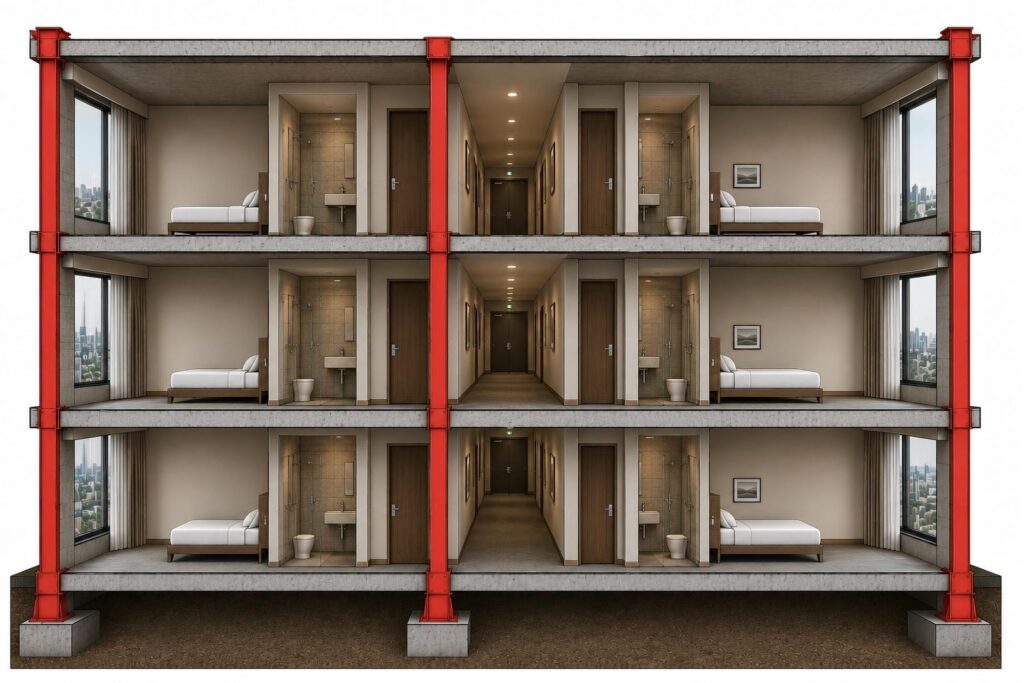
The arrangement shown is illustrative only and is not the only structural solution available. Depending on the structural system, design criteria and project economics, engineers may instead locate columns on both sides of the corridor, utilise corridor walls as structural walls, introduce transfer beams, increase span lengths, use post-tensioned slab systems or adopt steel or composite frame construction. The final structural grid is therefore the result of balancing guestroom planning, corridor design, building services coordination, construction costs and structural efficiency.
As a result, hotel structures are frequently regular in one direction and less regular in the other. This apparent irregularity is usually intentional, allowing the structure to support an efficient guestroom layout while avoiding unnecessary structural elements within circulation areas and maintaining flexibility for both design and operations. Ultimately, the structural grid is shaped as much by hotel planning requirements as by structural engineering considerations.
Matching the Column Grid to the Guestroom Layout
The most successful hotel structures are usually those in which the column grid has been developed around the guestroom layout rather than the other way around. Because guestrooms are repeated throughout the building, even relatively minor planning inefficiencies can be multiplied hundreds of times across a hotel. A structural arrangement that appears acceptable on a single floor may result in significant losses of usable area, reduced room counts or increased construction costs when repeated across multiple storeys.
For this reason, hotel planning typically begins with the guestroom module rather than the structural grid. The objective is to establish the optimum room dimensions, corridor arrangement and service strategy before determining the spacing of structural columns. Once these elements have been defined, the structural system can be developed to support them efficiently. This approach generally produces better commercial outcomes than attempting to fit guestrooms into a grid that has been selected without reference to hotel operations.
Understanding the Guestroom Module
In hotel design, the structural grid is typically coordinated with the guestroom module rather than with the guestroom’s usable dimensions. The module includes the sleeping area, bathroom arrangement, separating walls between rooms, finishes, structural tolerances and any service zones incorporated within the layout. As a result, the column spacing is typically determined by the overall planning module rather than the net area available to the guest.
The walls between guestrooms are particularly important. Hotels require a significantly higher degree of acoustic separation than many other building types because guests expect privacy and freedom from noise disturbance. Conversations, televisions, plumbing noise, alarms and general room activity should not be readily audible in neighbouring guestrooms. To achieve this level of performance, separation walls are often substantially thicker than standard internal partitions and may incorporate masonry, acoustic insulation, resilient fixings, double stud systems or multiple layers of plasterboard depending on local construction methods and brand standards.
As a result, a guestroom with an internal width of approximately 3.3 to 3.4 metres may require a planning module of 3.6 metres or more once acoustic separation walls and construction build-ups have been included. Across a hotel containing hundreds of guestrooms, these additional dimensions become a critical factor when determining the structural grid.
Aligning Columns with Room Partitions
A primary objective of hotel structural planning is to position columns so that they align with guestroom separation walls, service zones or other concealed areas. Columns located within wall cavities are generally invisible to guests and have little impact on the accommodation’s functionality. This approach allows guestrooms to maintain regular shapes and simplifies furniture planning, bathroom layouts and interior design coordination.
Problems arise when columns project into guestrooms or fall within usable accommodation space. Even relatively small projections can affect furniture placement, circulation routes and the perceived quality of the room. In some cases, columns may force designers to create irregular room shapes or introduce compromises that reduce the efficiency of the accommodation floor. Poorly coordinated structural grids can also affect the façade design, reducing window widths, interrupting glazing patterns or, in extreme cases, requiring structural elements to be positioned directly adjacent to or within the window zone, limiting views and natural daylight.
For this reason, structural grids are often selected so that two guestroom modules fit neatly between column lines, creating an efficient balance between structural economy and hotel planning requirements. In some circumstances, particularly where larger guestrooms, unusual room layouts or specific architectural requirements are proposed, a single guestroom module may be accommodated between column lines. Conversely, longer-span structural solutions may occasionally allow three guestroom modules between column lines, particularly where construction efficiency and standardised room layouts are prioritised. The objective is not simply to support the building but to do so in a way that complements the hotel’s operational requirements.
Balancing Structural and Operational Efficiency
Engineers naturally seek efficient structural solutions, while architects often focus on aesthetics and spatial quality. Hotel developers, however, must consider the overall commercial performance of the project. The most structurally efficient solution is not always the most operationally efficient solution, and the best hotel designs usually strike a balance between the two.
For example, increasing column spacing may reduce the number of structural supports required, but larger spans often result in heavier structural members, deeper beams and increased construction costs. Conversely, a grid that is perfectly efficient from a structural perspective may not align with the guestroom module, resulting in wasted space and reduced room counts. The optimum solution is therefore usually one that accommodates the guestroom planning module efficiently while remaining practical and economical to construct.
The financial implications can be substantial. A poorly coordinated grid may reduce the number of guestrooms that can be accommodated within a building footprint, create difficulties in coordinating service risers or require costly transfer structures elsewhere in the building. By contrast, a grid that reflects the guestroom module, acoustic wall requirements and operational needs of the hotel can improve planning efficiency, simplify construction and enhance the long-term value of the asset.
Typical Hotel Column Grids
There is no universal column grid that is suitable for every hotel project. The optimum grid depends on the market segment, guestroom design, structural system, building height, local construction methods and the presence of public facilities requiring larger spans. Nevertheless, most successful hotel developments tend to utilise a relatively narrow range of grid dimensions because hotel guestrooms themselves are based on a limited range of planning modules.
In many midscale and upscale hotels, structural grids are designed to accommodate two guestrooms between columns. This approach often provides an effective balance between structural efficiency and accommodation planning. The exact dimensions will vary from project to project, but the principle remains consistent: the grid should align with the guestroom module and the acoustic separation walls between rooms.
Designers sometimes assume that wider spans will automatically create a more efficient building because they reduce the number of columns required. In reality, hotel structures rarely benefit from excessively large spans within guestroom areas. Wider spans generally require deeper beams, thicker slabs or increased reinforcement, all of which can increase construction costs and affect floor-to-floor heights. In many cases, a slightly shorter span that aligns perfectly with the guestroom module will produce a more efficient overall development.
Double-Loaded Corridor Hotels
The majority of urban and business hotels are designed around a double-loaded corridor arrangement, where guestrooms are located on both sides of a central corridor. This configuration is highly efficient because it maximises the number of guestrooms that can be accommodated within a given floor plate.
In these buildings, the structural grid is typically coordinated with the repeating room modules on either side of the corridor. The corridor itself often acts as an organising spine, allowing services, risers and circulation routes to be stacked efficiently throughout the building. Because accommodation floors are highly repetitive, relatively small improvements in planning efficiency can generate significant benefits across the entire property.
Double-loaded corridor layouts are particularly common in city centre hotels, airport hotels, conference hotels and many internationally branded properties where operational efficiency and room count are key drivers of project performance.
Single-Loaded Corridor Hotels
Resort hotels frequently adopt a different approach. Rather than placing guestrooms on both sides of a corridor, rooms may be arranged along a single-loaded corridor with views oriented towards the sea, mountains, golf course or another attractive feature.
While this arrangement can enhance room quality and maximise views, it generally results in a less efficient building footprint than a double-loaded corridor design. Structural grids often need to respond to larger balconies, external circulation spaces and a greater emphasis on façade design. As a result, the optimum grid for a resort hotel may differ significantly from that of a city hotel, even where the guestrooms themselves are similar in size.
Developers should therefore be cautious when applying standard hotel planning assumptions to resort projects. The relationship between structure, circulation and views often becomes a much more significant consideration.
Public Areas and Structural Planning
Guestroom floors are often the simplest parts of a hotel to plan structurally because they consist of repetitive room modules arranged around a regular column grid. Public areas present a very different challenge. Hotel lobbies, restaurants, ballrooms, conference facilities, spas and other function spaces typically require larger open areas with fewer internal columns. While a guestroom can easily accommodate a column within a wall, a conference hall divided by structural columns may be commercially unusable.
This difference frequently creates tension between the structural requirements of the hotel tower and those of the public areas below. The guestroom floors above may require a regular column grid for efficiency, while the ballroom or conference facilities beneath may require large column-free spans. These competing requirements should be considered during the earliest stages of planning, as they can have a major influence on both construction costs and building efficiency.
Where possible, large-span functions such as ballrooms, conference centres and major restaurants are often located at ground-floor or podium level outside the primary hotel tower structure. This approach can simplify the structural design, improve guest access, facilitate servicing and deliveries, and provide more straightforward fire egress arrangements. It also reduces the likelihood of expensive structural compromises elsewhere in the building.
Transfer Structures
When large open spaces are located directly beneath a guestroom tower, structural transfer systems are often required. Transfer beams, transfer trusses, transfer slabs or other major structural elements may be introduced to redirect loads from the regular column grid above to alternative support locations below.
Although transfer structures can provide valuable planning flexibility, they are rarely inexpensive. They often increase structural depth, consume valuable floor-to-floor height, complicate mechanical and electrical service distribution and add significant construction costs. In some cases, the transfer structure itself becomes one of the largest and most expensive structural elements within the entire project.
Many costly design problems arise when conference facilities, ballrooms or other large-span public spaces are introduced into a tower structure without fully considering their structural implications. A ballroom located beneath twenty storeys of guestrooms may appear attractive from a planning perspective, but the resulting transfer structure can significantly affect project economics. Successful hotel developments therefore consider guestroom planning, public area requirements and structural strategy as a single coordinated exercise rather than as separate design decisions.
Floor-to-Floor Heights and Vertical Planning
Floor-to-floor heights are among the most important and frequently underestimated aspects of hotel design. While developers often focus on room sizes, building footprints, and room counts, a hotel’s vertical dimensions can significantly impact construction costs, planning efficiency, guest experience, and long-term operational performance. Decisions regarding floor-to-floor heights influence not only the appearance of the building but also the accommodation of structural elements, building services, and public spaces.
Unlike many building types, hotels contain a variety of functions with very different spatial requirements. Guestrooms, corridors, restaurants, ballrooms, meeting facilities, spas, back-of-house areas and plant rooms all require different ceiling heights and service zones. Successful hotel design therefore involves more than simply repeating a standard floor throughout the building. The vertical arrangement of these functions must be carefully coordinated to balance guest expectations, operational needs and construction efficiency.
The cumulative impact of floor-to-floor heights should not be underestimated. An additional 100mm per floor may appear insignificant in isolation, but when repeated across twenty or thirty storeys it can substantially increase the overall building height. In locations with planning restrictions, aviation constraints or maximum height limitations, efficient vertical planning can directly influence the number of floors and guestrooms that can be accommodated within a project.
Typical Hotel Floor-to-Floor Heights
| Area | Typical Floor-to-Floor Height | Notes |
|---|---|---|
| Guestrooms | 3.2 – 3.6 m | Hot climates, luxury hotels and buildings with extensive MEP requirements often require greater floor-to-floor heights. |
| Restaurants | 4.0 – 5.0 m | Larger open-plan restaurants generally require greater ceiling heights and larger service zones than smaller dining outlets. |
| Meeting Rooms | 4.0 – 5.0 m | Requirements increase with room size, audiovisual systems and flexibility requirements. |
| Ballrooms | 6.0 – 8.0 m | Large conference and banqueting facilities often require significant ceiling heights to accommodate lighting, rigging, audiovisual equipment and architectural features. |
| Hotel Lobby | 5.0 – 10.0 m | Frequently used as an architectural feature space and may incorporate double-height volumes, mezzanines, balconies or feature staircases. |
| Spa & Leisure Areas | 3.5 – 5.0 m | Requirements vary depending on pool halls, treatment rooms, fitness facilities and building services requirements. |
| Back-of-House Areas | 2.8 – 3.5 m | Administration offices, staff facilities and support areas can often be accommodated with lower floor-to-floor heights than guest-facing spaces. |
Guestroom Floors
Guestroom floors are generally the most repetitive parts of a hotel and are often designed with relatively consistent floor-to-floor dimensions. The objective is to provide comfortable ceiling heights for guests while accommodating structural slabs, air-conditioning systems, plumbing, fire protection systems and other building services.
Developers sometimes focus exclusively on the finished ceiling height within the room, overlooking the substantial space required above the ceiling for services. Poor coordination between structural and building services disciplines can result in unnecessarily large ceiling voids or increased floor-to-floor heights, both of which can affect project economics. Efficient coordination of structural systems and building services is therefore essential in achieving commercially successful hotel developments.
Public Areas and Double-Height Spaces
Public areas often require significantly greater floor-to-floor heights than guestroom floors. Hotel lobbies, restaurants, bars, meeting facilities and ballrooms are frequently designed with higher ceilings to create a greater sense of space and improve the guest experience. In some cases, double-height or even triple-height spaces may be incorporated to create dramatic arrival experiences or landmark architectural features.
While these spaces can enhance the quality and positioning of a hotel, they also have structural and financial implications. Larger volumes require additional façade area, increased heating and cooling requirements and potentially more complex structural solutions. The benefits of generous public spaces should therefore be balanced against their impact on construction costs and operational efficiency.
Hotels targeting the luxury market may justify larger public volumes as part of the guest experience, whereas limited-service and select-service hotels often prioritise efficiency and room count over expansive public areas.
Transfer Floors and Service Zones
In larger hotels and high-rise developments, dedicated transfer floors or service zones may be required to accommodate major mechanical, electrical and plumbing infrastructure. These areas may contain air-handling equipment, water storage systems, electrical distribution equipment or other plant serving the building.
Transfer structures can also influence vertical planning. Where large-span public spaces are located beneath guestroom towers, the transfer beams or transfer slabs required to support the structure above may consume substantial depth within the building. This additional structural depth can affect floor-to-floor heights, building proportions and overall development costs.
Transfer floors and service zones also play an important role in coordinating building services and separating operational infrastructure from guest-facing spaces. Without adequate provision for service distribution, plumbing stacks, drainage systems, ventilation ducts and other building services may need to pass directly through public areas, creating operational, maintenance and acoustic challenges. Poorly coordinated service routes can result in noise transmission from guestrooms into meeting rooms, restaurants or lobby areas, while maintenance access becomes more difficult and disruptive. In extreme cases, leaks, drainage failures or other service-related issues can occur directly above guest-facing spaces, increasing both operational risk and reputational impact.
For this reason, vertical planning should always be coordinated with the structural and building services strategy. Decisions regarding public spaces, plant locations, riser arrangements and transfer structures can have consequences that extend far beyond a single floor of the building, influencing guest comfort, operational efficiency, maintenance requirements and long-term asset performance.
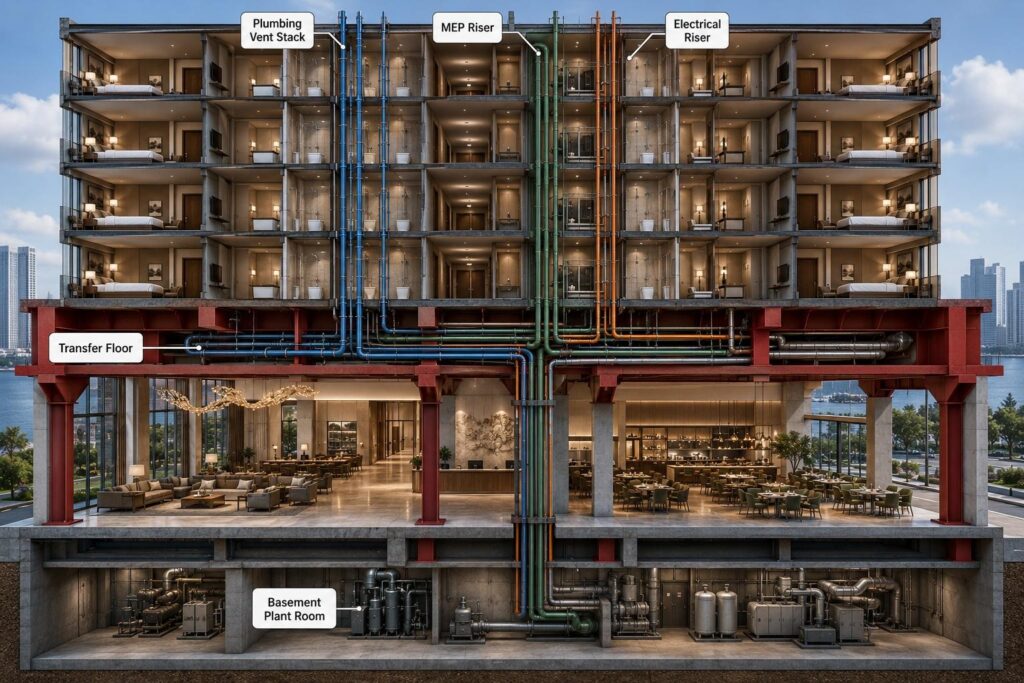
Illustrative example only. This diagram demonstrates the principle of a hotel transfer floor, where multiple plumbing, mechanical and electrical risers serving the guestroom floors above are consolidated and redistributed within a dedicated service zone before continuing to basement plant areas. The arrangement shown is simplified for clarity and does not represent a specific engineering solution. Actual hotel projects may use different riser locations, service strategies, transfer structures and plant configurations depending on the building design, structural system, operator requirements and local regulations.
Building Height Restrictions and Development Efficiency
Many hotel developments are subject to planning controls that limit overall building height, number of storeys or view impacts. In these situations, efficient floor-to-floor planning becomes particularly important. Reducing unnecessary structural depth or service voids may allow additional guestrooms to be accommodated within the permitted building envelope.
Conversely, inefficient vertical planning can reduce development potential. Excessive floor-to-floor heights may increase construction costs, require larger façades and limit the number of revenue-generating floors that can be achieved within planning constraints.
The most successful hotel projects therefore consider vertical planning as an integral part of the overall development strategy. Floor-to-floor heights should not be determined independently by architects, engineers or building services consultants. Instead, they should be coordinated across all disciplines to achieve an appropriate balance between guest comfort, operational requirements, construction efficiency and long-term asset value.
Vertical Circulation and Service Cores
Vertical circulation is a fundamental component of hotel planning and has a significant influence on both the structural design and operational efficiency of a property. Every hotel requires a system of lifts, staircases and service shafts that allow guests, staff, goods and building services to move efficiently throughout the building. These elements occupy valuable floor area, affect room layouts and often play an important role in the structural stability of the building itself.
Unlike guestrooms, restaurants or meeting facilities, vertical circulation spaces do not directly generate revenue. However, they are essential to the operation of the hotel and must be carefully balanced against the need to maximise guest accommodation and public facilities. Poorly planned cores can reduce room counts, increase travel distances and create operational inefficiencies that remain throughout the life of the property.
In many multi-storey hotels, the vertical circulation core also forms one of the most significant structural elements within the building. Lift shafts, stairwells and service risers are frequently grouped together into a reinforced concrete core that provides both circulation and structural stability. The location, size and configuration of this core should therefore be considered during the earliest stages of planning.
Lift and Elevator Planning
Lift planning has a direct impact on both guest experience and building efficiency. Hotels typically require a combination of guest lifts, service lifts and, in some cases, dedicated lifts serving conference facilities, executive lounges, parking levels or rooftop amenities. While final requirements should always be verified through specialist vertical transportation analysis, a common industry rule of thumb is to provide approximately one guest elevator for every 75–100 guestrooms. Most hotel operators also expect at least two guest lifts, even in relatively small hotels, to provide operational resilience and maintain acceptable service levels during maintenance periods or equipment failures.
The distinction between guest lifts and service lifts is equally important. In limited-service hotels, a service lift may occasionally be shared with guests, particularly in smaller properties. However, in full-service hotels, dedicated service lifts are generally regarded as essential. Hotel operators typically seek to separate guest circulation from housekeeping, engineering, food and beverage operations and goods movement wherever possible. Dedicated service lifts improve operational efficiency, reduce disruption to guests and help maintain service standards, particularly in hotels with restaurants, meeting facilities, ballrooms, spas or extensive back-of-house operations.
| Hotel Size | Typical Guest Lifts | Typical Service Lifts |
|---|---|---|
| Up to 75 rooms | 1–2 | Shared or 1 service lift |
| 75–150 rooms | 2 | 1 |
| 150–250 rooms | 3 | 1 |
| 250–400 rooms | 4 | 1–2 |
| 400–600 rooms | 4–6 | 2–3 |
| 600+ rooms | Project specific traffic study required | Project specific |
From a structural perspective, lift shafts occupy significant floor area and create permanent vertical openings throughout the building. Their location influences guestroom planning, corridor layouts, service cores and the positioning of back-of-house spaces. Because lift shafts extend through multiple floors, relocating them later in the design process can be both difficult and expensive.
Successful hotel designs integrate lift planning with structural and operational planning from the outset. The objective is not simply to provide sufficient lift capacity, but to do so in a way that supports efficient guest circulation, effective service operations and the long-term functionality of the building.
Service Cores and Structural Stability
Most hotels contain extensive vertical service infrastructure. Plumbing risers, drainage stacks, electrical risers, telecommunications systems, fire protection pipework and ventilation shafts all require dedicated routes through the building. These systems are often concentrated within a central service core alongside lifts and staircases.
In taller buildings, the service core frequently contributes to the overall structural stability of the hotel. Reinforced concrete core walls may resist wind loads, seismic forces and other lateral loads that affect the structure. As a result, the core is often one of the most heavily engineered elements within the building.
The coordination of service cores is particularly important in hotels because bathrooms, kitchens and mechanical systems are typically repeated throughout the property. Well-planned riser locations can simplify construction and operations, whereas poorly positioned risers may create planning inefficiencies that affect multiple floors.
Fire Escape Stairs
Fire escape stairs are among the most important planning elements within a hotel and are typically established during the earliest stages of design. Their location influences guestroom layouts, corridor arrangements, service core planning and the overall efficiency of the floor plate. Because stairs occupy valuable floor area and extend throughout the building, their position should be considered alongside the structural grid and circulation strategy rather than treated as a separate life-safety exercise.
The number, width and location of staircases are generally determined by local regulations, building height and occupancy levels. However, hotel operators and designers frequently impose additional requirements aimed at improving guest safety, operational performance and evacuation efficiency. These considerations often influence planning decisions long before detailed fire engineering or code compliance reviews are undertaken.
One of the key objectives of hotel planning is to provide clear and intuitive escape routes. Guests may be unfamiliar with the building, asleep when an incident occurs or unable to communicate in the local language. Circulation layouts should therefore be easy to understand and minimise the need for complex wayfinding during an emergency. Corridors should provide direct access to protected stairways wherever possible, reducing reliance on long or confusing circulation routes.
Travel Distances and Dead-End Corridors
Travel distances and dead-end corridors are important considerations in the planning of guestroom floors. While specific requirements vary between jurisdictions and hotel brands, designers generally seek to minimise dead-end corridors wherever practical. Long dead ends can create confusion during an evacuation and may require guests to reverse direction before reaching a protected means of escape.
The location of staircases therefore has a direct impact on floor planning efficiency. A layout that maximises room count may appear attractive during the early stages of design but can become problematic if travel distances become excessive or if dead-end corridors increase beyond acceptable limits. Successful hotel layouts balance operational efficiency with clear and direct escape routes.
Developers should also recognise that travel distance requirements can affect the achievable floor plate size, room count and positioning of service cores. For this reason, stair planning should be considered at the same time as guestroom planning rather than reviewed only after the accommodation layout has been completed.
Stair Separation and Protected Corridors
The separation of escape stairs is another important planning consideration. In multi-storey hotels, staircases should be positioned so that a single fire event is unlikely to compromise all available escape routes. The appropriate separation distance will depend on local regulations and the overall fire strategy, but the principle is to provide alternative routes that remain available if one stair becomes inaccessible.
Protected corridors and protected stair enclosures form a critical part of this strategy. These areas are designed to resist the spread of fire and smoke, allowing occupants to reach a place of safety even when other parts of the building are affected. Their location influences the arrangement of guestrooms, service spaces and circulation routes throughout the hotel.
Because protected stairs and corridors are repeated on every floor, their impact on planning efficiency can be substantial. Early coordination between architects, structural engineers, fire consultants and hotel planners can often improve both life-safety performance and overall building efficiency.
Public Staircases and Feature Stairs
In addition to fire escape stairs, many hotels incorporate public staircases as architectural or operational features. Grand staircases within lobbies, conference centres and event spaces can enhance the guest experience, improve wayfinding and create focal points within the building.
These features often require significant structural coordination. Stair openings interrupt floor slabs and may impose local load-transfer requirements. In some cases, feature staircases become major architectural elements that influence the planning of entire public spaces. Developers should therefore evaluate public staircases not only in terms of appearance but also in relation to structural implications, circulation patterns and operational benefits.
Core Efficiency and Space Planning
The size and configuration of the vertical circulation core can have a major impact on hotel efficiency. An oversized core may consume valuable floor area that could otherwise be used for guestrooms or revenue-generating facilities. Conversely, an undersized core may create operational bottlenecks, inadequate lift capacity or difficulties in accommodating building services.
The objective is to achieve an appropriate balance between operational performance and development efficiency. Lift shafts, stairwells, service risers and structural walls should be coordinated to minimise wasted space while maintaining effective circulation and service distribution throughout the building.
The most successful hotel developments consider lifts, stairs, service risers, protected corridors and structural walls as a single coordinated system. By integrating operational requirements, life-safety objectives and structural planning from the outset, developers can improve floor efficiency, simplify construction and create buildings that are both safe and commercially effective.
Roof Design and Plant Areas
Roof design forms an important part of the overall structural strategy of a hotel. Beyond providing weather protection, the roof frequently accommodates major building services, technical equipment and, in some cases, guest amenities. Decisions relating to roof construction can influence structural loads, maintenance requirements, building height, operational efficiency and future flexibility.
The roof is often required to perform several functions simultaneously. It may support mechanical and electrical plant, provide access for maintenance personnel, accommodate renewable energy installations and, increasingly, serve as a location for restaurants, bars, pools or other guest facilities. These requirements should be considered during the early stages of design, as they can affect both the structure below and the long-term operation of the hotel.
Because roof-level functions vary considerably between projects, the design approach should be driven by operational requirements rather than architectural appearance alone. A hotel with extensive rooftop amenities will have very different structural requirements from a limited-service hotel where the roof is used primarily for plant and maintenance access.
Roof Structures
Most contemporary hotels utilise flat roof structures, particularly in urban developments and larger properties. Flat roofs provide flexibility for plant installations, maintenance access and rooftop facilities, while also simplifying the coordination of services and structural elements.
Pitched roofs remain common in certain resort, heritage and lifestyle developments where architectural character forms an important part of the guest experience. While pitched roofs can contribute significantly to a property’s visual identity, they generally provide less usable space for plant and technical equipment and may require alternative service strategies. The selection of a roof structure should therefore consider not only aesthetics, but also maintenance, service integration and future operational requirements.
Rooftop Plant Areas
In many hotels, a significant proportion of the building’s technical infrastructure is located at roof level. Chillers, cooling towers, air handling units, water tanks, lift overruns, electrical equipment, communications systems and solar installations may all require space within rooftop plant areas.
These installations can create substantial structural loads and may also introduce vibration, noise and maintenance access requirements. The roof structure must therefore be designed not only to support the equipment itself but also to accommodate servicing, replacement and future upgrades throughout the life of the building.
Careful planning is also required to minimise the impact of plant areas on guests and neighbouring properties. Equipment locations, screening arrangements and acoustic treatments should all be considered as part of the overall roof design strategy.
Rooftop Amenities
Rooftop facilities have become increasingly common in hotel developments, particularly in urban destinations where views can enhance the guest experience and create additional revenue opportunities. Rooftop restaurants, bars, lounges, event spaces and swimming pools can all contribute to a hotel’s positioning and market appeal.
These facilities often impose structural loads that differ significantly from those found elsewhere in the building. Swimming pools, landscaped areas and heavily occupied event spaces may require additional structural capacity and should be incorporated into the design from the earliest planning stages.
The relationship between rooftop amenities and the floors below also requires careful consideration. Noise transmission, service access, guest circulation and fire safety requirements can all influence the success of rooftop facilities and their impact on hotel operations.
Maintenance Access and Equipment Replacement
Hotel buildings are long-term assets, and rooftop equipment will inevitably require maintenance, repair and replacement during its operational life. Access arrangements should therefore be considered during the design stage rather than after construction has been completed.
Plant equipment installed during construction may become significantly more difficult to remove once the hotel is operational. Access routes, lifting requirements, crane locations and equipment clearances should all be evaluated when planning rooftop plant areas. By considering maintenance and replacement requirements from the outset, developers can reduce future operational disruption, simplify asset management, and avoid costly interventions later in the building’s life.
Structural Systems Used in Hotels
Once the column grid and general building layout have been established, the next major decision is the selection of the structural system. The structural system determines how loads are transferred through the building and influences construction costs, construction speed, floor-to-floor heights, acoustic performance and long-term flexibility. While the structural engineer is ultimately responsible for the detailed design, hotel developers should understand the advantages and limitations of the principal systems used in hotel construction.
There is no single structural solution that is appropriate for every hotel project. Factors such as building height, local construction practices, labour availability, material costs, seismic requirements and project programme can all influence the choice of structure. A system that is highly efficient in one market may be uneconomic or impractical in another. For this reason, structural systems should always be evaluated within the context of the specific project rather than selected on the basis of general preference.
In most cases, the structural system should support the operational requirements of the hotel rather than dictate them. The most successful projects are usually those in which the structural engineer, architect, hotel planner and developer work together to achieve an appropriate balance between construction efficiency, operational performance and long-term asset value.
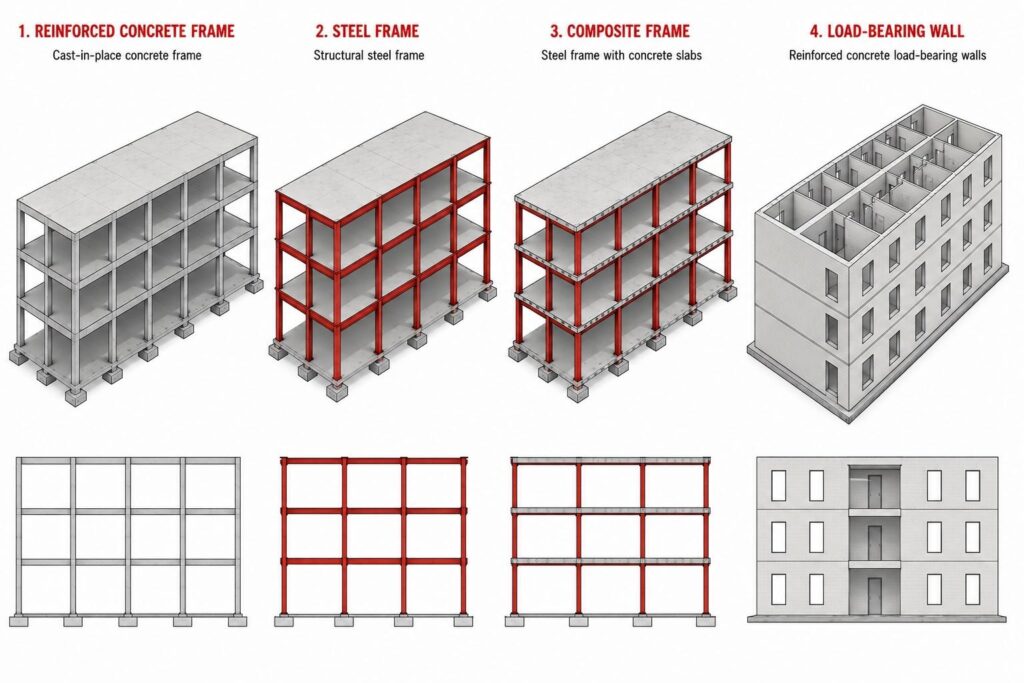
Reinforced Concrete Frame Construction
Reinforced concrete frame construction is the most widely used structural system for hotels in many parts of the world. The structure typically consists of reinforced concrete columns, beams, shear walls and floor slabs cast in situ, creating a durable and robust building framework.
Concrete construction offers several advantages for hotel projects. It provides excellent fire resistance, strong acoustic separation and good vibration control, all of which are important considerations in guest accommodation. Reinforced concrete can also be adapted to a wide variety of building shapes and heights, making it suitable for everything from limited-service hotels to large urban towers and integrated resorts.
The principal disadvantages are construction speed and structural weight. Concrete buildings generally require longer construction programmes than some alternative systems, particularly where extensive formwork and curing periods are involved. Nevertheless, in many markets the familiarity of contractors with concrete construction, combined with the availability of materials and labour, makes it the preferred solution for hotel developments.
Steel Frame Construction
Steel frame construction is widely used in some regions, particularly North America, the United Kingdom and parts of Northern Europe. The structure is formed from steel columns and beams that are fabricated off-site and assembled on-site, often allowing construction to proceed more quickly than traditional concrete construction.
The primary advantage of steel is its ability to achieve longer spans with relatively lightweight structural members. This can be particularly beneficial in hotels containing large public spaces such as conference facilities, ballrooms and exhibition areas. Off-site fabrication can also improve quality control and reduce programme durations.
However, steel structures generally require additional fire protection measures and may require greater attention to acoustic isolation and vibration control than concrete structures. In markets where steel prices are high or specialist contractors are limited, steel construction may also prove less economical than reinforced concrete alternatives.
Composite Steel and Concrete Structures
Many modern hotels utilise composite structural systems that combine elements of both steel and concrete construction. Typical examples include steel frames supporting concrete floor slabs or concrete cores combined with steel-framed accommodation wings.
Composite structures seek to combine the advantages of both materials. Steel can provide long spans and rapid construction, while concrete contributes mass, stiffness, acoustic performance and fire resistance. These systems are particularly common in larger mixed-use developments where different parts of the building have different structural requirements.
Although composite systems can offer considerable benefits, they often require more detailed coordination between design disciplines and may involve greater construction complexity than purely concrete or purely steel solutions.
Load-Bearing Wall Construction
Load-bearing wall construction transfers building loads directly through structural walls rather than through a skeletal frame of columns and beams. Historically, this approach was common in smaller hotels and guesthouses and continues to be used for some low-rise hospitality projects.
Where room layouts are highly repetitive, load-bearing walls can provide a simple and economical structural solution. The walls separating guestrooms may perform both structural and acoustic functions, potentially reducing the need for separate structural frames and partitions.
The main limitation is flexibility. Because the walls themselves support the building, future alterations can be more difficult and expensive than in framed structures. As building height increases, load-bearing systems also become less practical, which limits their application in larger hotel developments.
Modular and Prefabricated Hotel Construction
Modular construction has attracted increasing interest within the hotel sector due to its potential to reduce construction periods and improve quality consistency. In a modular hotel, guestrooms or significant portions of guestrooms are manufactured in a factory environment before being transported to site and assembled into the completed building.
The repetitive nature of hotel accommodation makes the sector particularly well suited to modular construction. Guestrooms can often be produced to a consistent standard, reducing on-site labour requirements and improving programme certainty. This approach can be especially attractive in locations where labour availability is limited or construction costs are high.
However, modular construction is not appropriate for every project. Transportation constraints, local regulations, site access and building geometry can all affect feasibility. Developers should also recognise that successful modular projects require decisions to be finalised much earlier in the design process than is typically the case with conventional construction.
Choosing the Right Structural System
The selection of a structural system should be driven by the specific requirements of the hotel rather than by a preference for any particular construction method. Factors such as building height, guestroom configuration, public area requirements, local market conditions, construction programme and long-term operational objectives should all be considered when evaluating alternatives.
In many cases, several structural systems may be technically capable of delivering the project. The challenge for developers is to identify the solution that provides the best balance between construction cost, operational performance, flexibility and long-term asset value. A structural system that appears marginally cheaper during construction may prove less efficient over the life of the hotel, whereas a more robust solution may yield operational benefits that outweigh its higher initial cost.
Floor Systems and Slab Design
While columns, walls and structural frames provide the primary support for a hotel building, the floor system is often the element that has the greatest day-to-day impact on planning efficiency, guest comfort and construction costs. The floor system forms the structural platform upon which guestrooms, corridors, public spaces and back-of-house facilities are built. Its design influences ceiling heights, acoustic performance, service coordination, construction speed and the overall flexibility of the building.
In hotel development, floor systems must satisfy a wide range of requirements simultaneously. They must support the anticipated loads imposed by guestrooms, restaurants, meeting rooms and other facilities, while also limiting vibration and providing an acceptable level of acoustic separation between floors. At the same time, they must accommodate mechanical, electrical and plumbing services without creating excessive floor-to-floor heights that increase the overall size and cost of the building.
Because hotels are typically repetitive buildings, decisions relating to floor systems are repeated across every level. A relatively small saving in slab thickness or floor-to-floor height may produce significant reductions in construction costs when applied throughout a multi-storey development. Conversely, poorly considered floor systems can create operational issues that affect guest comfort for the entire life of the hotel.
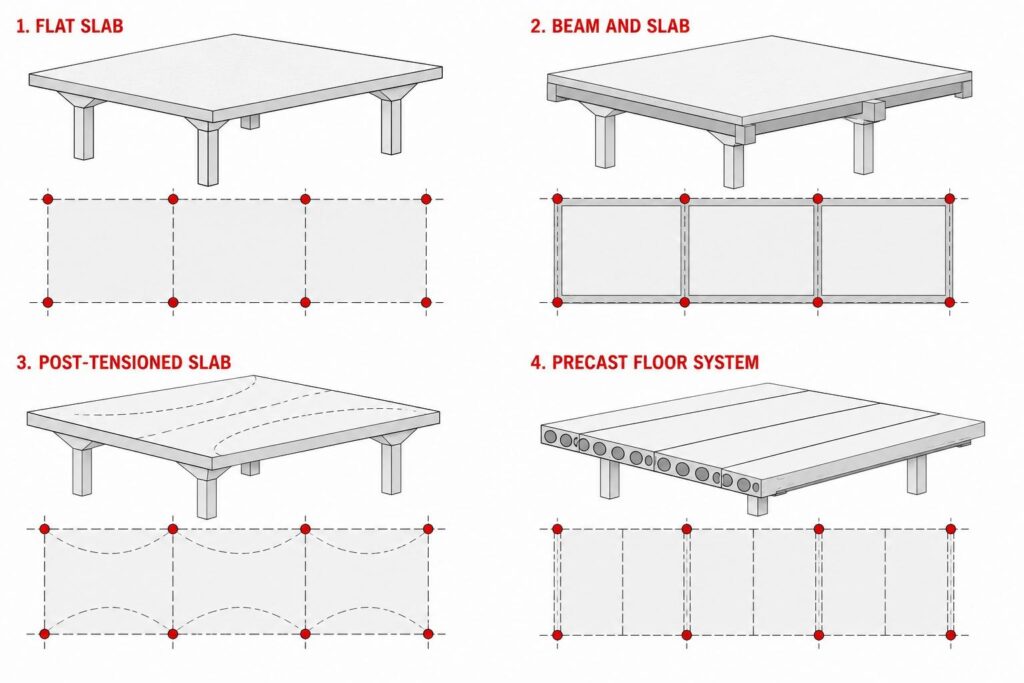
Flat Slab Construction
Flat slab construction is one of the most common floor systems used in modern hotel development. In this arrangement, floor slabs are supported directly by columns without the need for deep supporting beams. The result is a relatively simple structural system with a flat underside that can simplify service coordination and interior fit-out.
One of the principal advantages of flat slab construction is its efficiency. The absence of beams allows mechanical and electrical services to be routed more easily beneath the slab, reducing conflicts between structural and building service elements. Flat slabs can also contribute to lower floor-to-floor heights, which may reduce façade costs and overall building volume.
From a hotel planning perspective, flat slabs often provide greater flexibility when coordinating guestroom layouts and service routes. However, as spans increase, slab thicknesses may also need to increase, and additional reinforcement may be required around column locations to control punching shear and other structural forces.
Beam and Slab Construction
Beam and slab systems utilise structural beams to support the floor slab between columns. The beams carry a significant proportion of the structural load and transfer it to the supporting columns or walls.
This approach can be advantageous where longer spans are required or where structural efficiency is a primary consideration. Beams may allow thinner slab sections than would otherwise be possible, particularly in areas with substantial loading requirements.
The principal drawback in hotel applications is that beams often occupy valuable ceiling space. Mechanical ductwork, plumbing systems and electrical services must either pass beneath the beams or be coordinated around them. This can increase floor-to-floor heights or create design constraints within guestrooms and public spaces. For this reason, many hotel developers favour flat slab systems where practical, particularly within repetitive accommodation floors.
Post-Tensioned Slabs
Post-tensioned concrete slabs utilise high-strength steel tendons placed within the concrete and tensioned after the slab has gained sufficient strength. This process introduces compressive forces into the slab, allowing longer spans and thinner structural sections than conventional reinforced concrete construction.
The ability to reduce slab thickness can provide significant benefits in taller hotel buildings. Lower floor-to-floor heights may reduce façade areas, lift travel distances and overall building volume, generating savings that extend beyond the structural frame itself. Post-tensioned slabs can also create larger column-free areas, which may be advantageous in public spaces and mixed-use developments.
However, post-tensioning generally requires specialist design expertise, careful quality control and experienced contractors. While the system can offer substantial benefits, its suitability depends on local construction capabilities and project-specific requirements.
Precast Floor Systems
Precast floor systems utilise structural elements manufactured off-site and transported to the construction site for installation. These systems may include precast planks, hollow-core slabs or other prefabricated structural components.
The principal advantage of precast construction is speed. Factory production can improve quality consistency while reducing the amount of labour required on site. In suitable markets, precast systems may shorten construction programmes and reduce weather-related delays.
For hotel projects, however, designers must pay careful attention to acoustic performance and service coordination. Joints between precast elements, service penetrations and structural connections all require careful detailing to achieve the levels of sound insulation expected in modern hotel accommodation.
Acoustic Performance Between Floors
Floor systems play a critical role in controlling noise transmission between guestrooms. Guests expect not only privacy from adjacent rooms but also protection from noise originating above and below their accommodation. Footsteps, moving furniture, mechanical equipment and plumbing systems can all create disturbances if the floor structure is inadequately designed.
Achieving satisfactory acoustic performance typically requires more than structural strength alone. Floor finishes, acoustic underlays, suspended ceilings, insulation layers and service coordination all contribute to the overall performance of the floor assembly. The structural slab forms only one component of a much larger acoustic strategy.
Developers should therefore avoid evaluating floor systems solely on the basis of structural cost. A solution that appears economical during construction may require additional acoustic treatments or may generate guest complaints if sound transmission is not adequately controlled.
Service Integration and Ceiling Heights
One of the most important practical considerations in floor system design is the coordination of building services. Hotels require extensive networks of air-conditioning ducts, plumbing pipework, drainage systems, electrical cabling, fire protection systems and communications infrastructure. These services must be accommodated within limited ceiling spaces while maintaining attractive room proportions.
The relationship between the structural floor system and building services can significantly affect floor-to-floor heights. A poorly coordinated design may require additional building height simply to accommodate services beneath structural elements. Across a large hotel, even small increases in floor-to-floor dimensions can have a substantial impact on construction costs and overall building mass.
Successful hotel projects consider structural and service requirements together from the earliest stages of design. Coordination between architects, engineers and hotel planners can often reduce ceiling voids, improve efficiency and avoid costly redesign later in the development process.
Selecting an Appropriate Floor System
There is no universally superior floor system for hotel development. The optimum solution depends on the structural grid, building height, construction programme, acoustic requirements, service strategy and local construction practices.
In most projects, the best floor system is the one that achieves the appropriate balance between structural efficiency, guest comfort, service integration and construction economy. Developers should therefore evaluate floor systems not only on the basis of initial construction cost but also in terms of their impact on building performance, operational efficiency and long-term asset quality.
Acoustic Performance and Vibration Control
Acoustic performance is one of the most important, yet frequently underestimated, aspects of hotel design. Guests may forgive many minor shortcomings during their stay, but noise disturbance can quickly lead to dissatisfaction, complaints and poor reviews. Unlike office buildings, where occupants are generally active during the day, hotels must provide comfortable environments for sleeping, relaxation and privacy. The ability of a building to control noise transmission is therefore a fundamental component of the guest experience.
Acoustic performance should not be considered solely as an interior design issue. It is heavily influenced by structural decisions made during the earliest stages of planning. The selection of structural systems, floor construction, wall assemblies, column locations and building services all contribute to the acoustic characteristics of the finished hotel. Attempting to solve acoustic problems after construction has commenced is often expensive and significantly less effective than addressing them during the design process.
Successful acoustic design requires consideration of both airborne noise and structure-borne noise. Airborne noise includes conversations, televisions, music and other sounds that travel through the air before passing through walls, floors or ceilings. Structure-borne noise results from impacts or vibrations transmitted through the building structure itself, such as footsteps, moving furniture, mechanical equipment or plumbing systems.
Guestroom-to-Guestroom Noise Control
The walls separating guestrooms are among the most critical acoustic elements within a hotel. Guests expect a high degree of privacy and should not be able to easily hear conversations, televisions or other activities taking place in neighbouring rooms. Achieving this level of performance requires more than simply increasing wall thickness; the entire wall assembly must be designed to limit sound transmission effectively.
Modern hotel construction frequently utilises specialised acoustic wall systems incorporating masonry, insulation, resilient channels, double stud construction or multiple layers of plasterboard. The choice of solution will depend on local construction methods, brand standards and performance objectives. In many cases, the acoustic wall assembly becomes an integral part of the guestroom planning module and therefore directly influences column grid design and structural coordination.
Particular attention should also be given to doors, service penetrations and junctions between walls and floors. Even a well-designed partition can perform poorly if sound is allowed to bypass the primary barrier through gaps, pipe penetrations or poorly detailed connections.
Floor-to-Floor Noise Transmission
Noise transmission between floors is often more difficult to address than horizontal sound transfer between guestrooms. Guests may be disturbed by footsteps, moving luggage, furniture movement, exercise equipment or other activities occurring in rooms above their own accommodation.
The structural floor slab forms an important component of the acoustic strategy, but it is rarely sufficient on its own. Effective solutions often combine structural mass with acoustic underlays, floating floor systems, resilient mounting details and suspended ceiling constructions. The objective is to reduce both airborne sound transmission and impact noise travelling through the structure.
Hotels containing spas, fitness centres, rooftop bars, nightclubs or other noise-generating facilities require particularly careful planning. Locating these uses directly above guestrooms can create operational challenges that may be difficult and expensive to resolve once the building is complete.
Building Services and Mechanical Noise
Mechanical, electrical and plumbing systems are among the most common sources of guest complaints in hotels. Air-conditioning equipment, pumps, fans, lifts, drainage stacks and water supply systems can all generate noise or vibration if not properly isolated from the building structure.
Acoustic performance should therefore be considered during the design of building services as well as the structural frame. Plant rooms should be positioned carefully, service risers should be coordinated with guestroom layouts and equipment should be mounted using appropriate vibration isolation systems. Pipework and ductwork may also require acoustic treatment to prevent noise transmission through the building.
The importance of service coordination increases as hotels become more complex. Luxury resorts, conference hotels and mixed-use developments often contain extensive mechanical systems that require particularly careful acoustic planning.
Vibration Control
Vibration is closely related to acoustics but presents its own distinct challenges. Guests may not necessarily hear a vibration problem, but they can often feel it. Excessive vibration can be caused by mechanical equipment, lifts, traffic, railway lines, nearby construction activities or even occupant movement within the building itself.
Structural systems with insufficient stiffness may be more susceptible to vibration issues, particularly where long spans have been introduced to create large column-free spaces. Steel structures, while highly efficient, often require greater attention to vibration control than heavier concrete structures due to their lower mass.
Where vibration-sensitive areas are identified, specialist analysis may be required during the design process. This is particularly important for hotels located near transport infrastructure, entertainment venues or major urban activity centres.
Acoustic Planning as a Development Consideration
Acoustic performance should be viewed as a commercial issue rather than purely a technical requirement. Guest satisfaction, online reviews, repeat business and brand reputation can all be influenced by the acoustic quality of the building. A structurally efficient hotel that suffers from persistent noise complaints is unlikely to be regarded as a successful development.
For this reason, developers should ensure that acoustic objectives are considered from the earliest stages of planning. Decisions relating to column grids, wall construction, floor systems, plant locations and building services should all be evaluated in terms of their potential impact on guest comfort. In many cases, relatively modest investments during design and construction can prevent significant operational problems throughout the life of the hotel.
The most successful hotel developments recognise that acoustic performance is not an optional enhancement but a core component of the guest experience. Structural design, architectural planning and building services coordination must therefore work together to create environments that are not only functional and efficient but also quiet, comfortable and conducive to a good night’s sleep.
Building Envelope and External Wall Design
The building envelope forms the boundary between the internal environment of the hotel and the external world. It includes the external walls, façade systems, windows, doors, roof structures and all associated components that protect the building from weather, temperature fluctuations, noise and moisture. While often viewed primarily as an architectural feature, the building envelope is also a critical component of the hotel’s structural, operational and environmental performance.
A well-designed building envelope contributes to guest comfort, energy efficiency, durability and long-term asset value. It influences heating and cooling loads, controls the ingress of wind and rain, provides acoustic protection from external noise sources and plays a major role in the visual identity of the property. Conversely, deficiencies in the building envelope can lead to increased operating costs, maintenance problems, guest complaints and premature deterioration of building components.
For hotel developers, the envelope should not be considered simply as a decorative façade applied to the outside of the structure. It is a complex system that must balance aesthetics, performance, construction costs and long-term maintenance requirements. Decisions relating to wall construction, glazing ratios, insulation levels and façade materials can have consequences that extend throughout the life of the building.
External Wall Construction
External wall systems vary considerably depending on the location, climate, building height and architectural style of the hotel. Common approaches include masonry cavity walls, reinforced concrete walls, lightweight framed wall systems and curtain wall assemblies. Each solution offers different advantages in terms of cost, thermal performance, durability and maintenance.
In many hotel developments, external walls perform multiple functions simultaneously. In addition to supporting their own weight and resisting wind loads, they must provide thermal insulation, acoustic protection, weather resistance and fire separation. The design challenge is to integrate these requirements into a wall assembly that remains practical and economical to construct.
The selection of wall construction should also reflect local construction practices and material availability. A wall system that performs well in one region may be impractical or uneconomic in another due to differences in labour skills, climate conditions or supply chains.
Thermal Insulation and Energy Performance
Energy efficiency has become an increasingly important consideration in hotel development. Hotels operate continuously throughout the day and night, often with significant demands for heating, cooling, ventilation and hot water. As a result, the thermal performance of the building envelope can have a major influence on operating costs.
External walls, roofs and glazing systems should be designed to minimise unwanted heat transfer while maintaining guest comfort. Effective insulation helps reduce energy consumption by limiting heat gains during warm weather and heat losses during colder periods. The specific insulation requirements will vary according to climate, but the underlying objective remains consistent: creating a stable and comfortable internal environment while minimising energy use.
Developers should consider thermal performance as part of a broader operational strategy. Investments in insulation, high-performance glazing and improved envelope detailing may increase initial construction costs but can often generate long-term savings through reduced utility consumption and improved guest comfort.
Glazing and Façade Systems
Windows and glazed façades are among the most visible elements of any hotel building. They influence natural daylight levels, views, guest experience and the overall appearance of the property. In resort destinations, waterfront locations and urban skyline developments, glazing often becomes a defining architectural feature.
However, extensive glazing can create challenges if not carefully managed. Large glazed areas may increase solar heat gain, contribute to higher cooling loads and create glare within guestrooms and public spaces. They may also affect acoustic performance in locations exposed to traffic, airports or entertainment districts.
Modern façade design therefore seeks to balance aesthetics and performance. Double glazing, solar control coatings, thermally broken framing systems and external shading devices can all contribute to improved building performance while preserving the desired architectural appearance.
Weather Resistance and Durability
Hotels are long-term assets, and the building envelope must be capable of withstanding years of exposure to environmental conditions. Wind, rain, humidity, ultraviolet radiation, temperature fluctuations and airborne pollutants can all affect the performance and appearance of façade materials over time.
The consequences of envelope failure can be significant. Water penetration may damage finishes, affect guestroom operations and create costly maintenance issues. In severe cases, moisture ingress can contribute to mould growth, corrosion or deterioration of structural components. For this reason, detailing, waterproofing and material selection are often just as important as the visible architectural design.
Durability considerations are particularly important in coastal environments, where salt-laden air can accelerate the deterioration of certain materials and building components. Resort hotels located near the sea frequently require enhanced corrosion protection and more robust maintenance strategies than comparable inland properties.
Acoustic Performance and External Noise Control
The building envelope plays a major role in protecting guests from external noise. Traffic, aircraft, railways, nightlife venues, entertainment districts and even neighbouring hotels can generate noise levels that affect guest comfort if not properly controlled.
Acoustic performance is influenced by the entire envelope assembly, including walls, glazing systems, ventilation openings and façade details. In many cases, windows become the weakest acoustic element within the external wall, making glazing specification particularly important in noisy urban environments.
Hotels located near airports, major roads or city centres often require enhanced acoustic glazing and carefully designed ventilation systems to maintain acceptable levels of guest comfort. These requirements should be considered during the earliest stages of planning rather than treated as secondary design considerations.
The Building Envelope as a Long-Term Investment
The building envelope is one of the most visible and technically demanding components of a hotel. It influences appearance, guest comfort, operating costs, maintenance requirements and asset durability throughout the life of the property. Decisions made during design and construction can continue to affect performance decades after the hotel has opened.
Developers should therefore evaluate envelope systems not only on the basis of initial construction costs but also in terms of energy performance, maintenance requirements, replacement cycles and long-term operational impacts. A façade solution that appears economical at the outset may prove more expensive over time if it requires frequent repairs, increased energy consumption or premature replacement.
The most successful hotel developments treat the building envelope as an integrated performance system rather than a purely architectural feature. By balancing aesthetics, thermal efficiency, acoustic performance, weather protection and durability, developers can create buildings that remain attractive, comfortable and economically sustainable throughout their operational life.
Sustainability and Environmental Performance
Environmental performance has become an increasingly important consideration in hotel development. Historically, structural design focused primarily on strength, durability and construction cost. Today, developers, investors, operators and lenders are placing greater emphasis on the environmental impact of both the construction process and the long-term operation of the building.
One of the most significant environmental considerations is embodied carbon, which refers to the greenhouse gas emissions associated with the extraction, manufacture, transportation and installation of construction materials. Structural systems can have a major influence on a project’s embodied carbon footprint. Reinforced concrete, for example, remains one of the most widely used construction materials in the hotel sector but can also represent a substantial source of embodied carbon due to the cement used in concrete production. As a result, many projects are exploring lower-carbon concrete mixes, recycled materials, optimised structural designs and alternative construction methods to reduce environmental impacts.
Operational carbon is equally important. Hotels are energy-intensive buildings that operate continuously throughout the year, requiring heating, cooling, ventilation, lighting and hot water systems to support guest comfort. Structural design and building envelope performance can significantly influence long-term energy consumption. Decisions relating to insulation, glazing, thermal mass, solar shading and air-tightness can reduce energy demand and improve overall building efficiency throughout the life of the asset.
Building Envelope Performance
The external envelope plays a critical role in environmental performance. Well-insulated walls, roofs and glazing systems help reduce heat gains during warmer periods and heat losses during colder weather, lowering the demand placed on mechanical systems. Façade design can also influence daylight penetration, solar control and occupant comfort, helping to reduce reliance on artificial lighting and cooling systems.
Developers should also consider the broader environmental impact of façade design. Excessive glazing may increase cooling loads, while highly reflective façades can contribute to glare and local heat island effects. The most successful hotel projects seek to balance aesthetics, guest experience and environmental performance rather than focusing on appearance alone.
WELL, LEED and BREEAM Considerations
Many hotel developments now pursue recognised environmental and wellbeing certification programmes as part of their sustainability strategy. Common examples include LEED, BREEAM and WELL, each of which evaluates different aspects of building performance.
LEED and BREEAM place significant emphasis on environmental factors such as energy efficiency, water consumption, materials, carbon emissions and sustainable site development. Structural systems, material selection and envelope performance can all contribute towards certification objectives.
WELL adopts a broader approach by focusing on the health, wellbeing and comfort of building occupants. Issues such as indoor air quality, thermal comfort, acoustics, daylight access and occupant experience are central components of the assessment process. Many of the structural and envelope decisions discussed throughout this section can therefore contribute not only to environmental performance but also to guest wellbeing and operational quality.
As sustainability expectations continue to evolve, hotel developers should view structural and envelope design not simply as construction decisions but as long-term contributors to environmental performance, guest comfort and asset value. Early consideration of sustainability objectives can often deliver benefits throughout both the development process and the operational life of the hotel.
Fire Resistance and Life Safety Considerations
Fire safety is one of the most critical aspects of hotel design and construction. Unlike many other building types, hotels accommodate large numbers of guests who may be unfamiliar with the building, asleep when an incident occurs or unable to communicate in the local language. The design of the structure, building envelope and internal layout must therefore support not only the prevention and containment of fire but also the safe evacuation of guests and staff should an emergency arise.
For hotel developers, fire safety should not be viewed simply as a regulatory requirement. Fire resistance and life safety measures influence structural systems, floor construction, wall assemblies, service installations, room layouts and operational procedures throughout the property. Decisions made during the earliest stages of planning can affect both the cost of construction and the long-term safety and resilience of the building.
While specific requirements vary between countries and jurisdictions, the fundamental principles remain broadly consistent. Hotel buildings should be designed to resist structural collapse during a fire, limit the spread of flames and smoke, provide protected escape routes and allow emergency services to respond effectively. Successful hotel projects integrate these principles into the design from the outset rather than attempting to address them later through corrective measures.
Structural Fire Resistance
One of the primary objectives of fire-resistant design is to ensure that the structure remains stable for a sufficient period to allow evacuation and emergency response. Structural failure during a fire can have catastrophic consequences, particularly in multi-storey hotels where large numbers of guests may be occupying upper floors.
Different structural systems achieve fire resistance in different ways. Reinforced concrete structures generally provide excellent inherent fire resistance due to the non-combustible nature of the material and the protection afforded to embedded reinforcement. Steel structures, while highly efficient, typically require additional fire protection measures because structural steel can lose strength when exposed to high temperatures. These measures may include fire-resistant coatings, sprayed fire protection systems or fire-rated cladding assemblies.
The required fire resistance period will depend on local regulations, building height and occupancy characteristics. However, the underlying principle is always the same: the structure should maintain its integrity long enough to support safe evacuation and emergency operations.
Compartmentation and Fire Separation
Modern hotel design relies heavily on the principle of compartmentation. Rather than allowing fire and smoke to spread freely throughout the building, the hotel is divided into a series of fire-resistant compartments designed to contain an incident within a limited area.
Guestrooms are typically separated from adjacent rooms and corridors by fire-rated walls and floor assemblies. These barriers are intended to slow the spread of fire and smoke, protecting occupants in neighbouring areas while evacuation procedures are implemented. Similar principles apply to plant rooms, kitchens, storage areas and other spaces that may present elevated fire risks.
Compartmentation is only effective when it is maintained throughout the building. Service penetrations for pipes, ducts, cables and other building systems must be properly sealed using approved fire-stopping materials. Even small gaps in otherwise fire-resistant assemblies can compromise the performance of the entire system.
Protected Escape Routes
A fundamental objective of hotel life safety design is ensuring that guests can reach a place of safety quickly and efficiently during an emergency. Escape routes must therefore be clearly defined, adequately sized and protected from fire and smoke.
In most hotels, this protection is achieved through fire-rated stairwells, protected corridors and carefully planned means of egress. The location and number of staircases are often determined by building height, occupancy levels and local regulations. In taller buildings, additional measures such as smoke control systems, refuge areas or pressurised escape stairs may also be required.
Developers should recognise that life safety requirements can influence the efficiency of the building layout. Stair locations, corridor lengths and compartment boundaries may all affect room counts and floor planning. These factors should therefore be considered during the earliest stages of design rather than after architectural layouts have been finalised.
Smoke Control and Building Services
While flames often receive the greatest attention, smoke is frequently the most significant threat to life during a fire. Smoke can reduce visibility, impair breathing and spread rapidly throughout a building if not properly controlled.
Mechanical and electrical systems therefore play an important role in fire safety. Smoke extraction systems, pressurised stairwells, fire dampers and emergency ventilation arrangements are commonly incorporated into hotel buildings to limit smoke movement and protect escape routes. These systems require close coordination between structural, architectural and building services disciplines.
Special attention should also be given to service risers and vertical shafts, which can provide pathways for fire and smoke to spread between floors if not properly protected. Fire-rated enclosures and compartmentation measures are essential to maintaining the integrity of the building’s fire strategy.
Active Fire Protection Systems
In addition to passive fire protection measures such as fire-resistant walls and floors, hotels typically incorporate a range of active fire protection systems designed to detect, control and suppress fires.
These systems commonly include automatic fire detection, alarm systems, emergency lighting, sprinkler installations and firefighting equipment. Together, they provide multiple layers of protection that help detect incidents at an early stage and reduce the risk of fire spreading throughout the property.
The effectiveness of active systems depends not only on the equipment itself but also on proper maintenance and operational procedures. Hotel operators must ensure that fire protection systems are regularly inspected, tested and maintained throughout the life of the building.
Fire Safety as a Development Priority
Fire resistance and life safety considerations influence virtually every aspect of hotel design, from structural systems and floor construction to building services and operational planning. While compliance with regulations is essential, the most successful hotel developments view fire safety as a fundamental design objective rather than a minimum requirement.
Early coordination between architects, structural engineers, building services consultants and hotel planners can help ensure that fire safety measures are integrated efficiently into the design. This approach often produces better operational outcomes, avoids costly redesign and supports the long-term resilience of the asset.
For hotel owners and developers, investment in robust fire safety measures should be viewed not only as a legal obligation but also as a critical component of guest protection, business continuity and asset preservation. A well-designed hotel should provide guests with confidence that the building is not only comfortable and attractive but also safe and resilient in the event of an emergency.
Common Structural Mistakes in Hotel Development
Many structural problems encountered during hotel development do not arise because the engineering is incorrect. Instead, they occur because structural decisions are made without fully considering the operational requirements of the hotel. The most successful projects treat structure, architecture, building services and hotel operations as a coordinated design exercise from the earliest stages of planning.
Designing the Structure Before the Hotel
One of the most common mistakes is establishing a structural grid before the guestroom layout has been properly developed. Hotels function most efficiently when the structure supports the accommodation module rather than forcing guestrooms to adapt to an arbitrary grid.
A grid that appears structurally efficient may reduce room counts, create awkward room layouts or introduce planning inefficiencies that affect the project throughout its operational life. In most cases, the guestroom module should be established before the structural grid is finalised.
Using Office Building Grids for Hotels
Developers and designers with limited hotel experience sometimes apply structural principles commonly used in office buildings. While office buildings prioritise flexibility and large open floor plates, hotels depend upon highly repetitive room layouts.
Large office spans may create structural dimensions that are poorly suited to guestroom planning. Hotel structures should be developed around accommodation modules, acoustic separation requirements and operational efficiency rather than generic commercial building standards.
Ignoring Acoustic Requirements
Acoustic performance is often considered too late in the design process. Guestroom separation walls, floor assemblies, plant rooms and service risers all influence the guest experience and should be incorporated into structural planning from the outset.
A structurally efficient building that generates persistent noise complaints is unlikely to be regarded as a successful hotel. Acoustic performance should therefore be viewed as a commercial consideration as well as a technical one.
Creating Expensive Transfer Structures
Large-span public spaces such as ballrooms and conference facilities frequently create conflicts with the regular column grid required by guestroom towers. When these issues are not addressed early, projects often become dependent on transfer beams, transfer slabs or other major structural interventions.
Transfer structures can consume floor-to-floor height, increase construction costs and complicate service coordination. Wherever practical, large-span public facilities should be planned in ways that minimise the need for major structural transfers.
Underestimating Floor-to-Floor Heights
Developers sometimes focus on guestroom sizes while overlooking the vertical dimensions of the building. Structural depth, mechanical services, transfer structures and public area requirements all consume valuable space within the building section.
Small increases in floor-to-floor height can have a significant cumulative impact across a multi-storey hotel. Inefficient vertical planning may increase façade costs, limit room counts or create difficulties where planning restrictions impose maximum building heights.
Poor Coordination Between Structure and Building Services
Mechanical, electrical and plumbing systems require substantial space throughout a hotel. When structural and service designs are developed independently, conflicts frequently arise that result in redesign, increased costs or operational compromises.
Successful hotel projects coordinate structural systems, service routes and plant requirements from the earliest stages of design. This approach often reduces ceiling voids, improves planning efficiency and simplifies construction.
Treating the Roof as Leftover Space
Roof areas frequently accommodate major mechanical equipment, service infrastructure and guest amenities. When rooftop requirements are considered too late, projects may encounter structural limitations, maintenance difficulties or operational constraints.
Roof design should be integrated into the overall structural strategy from the outset, particularly where rooftop pools, restaurants, bars or extensive plant installations are proposed.
Focusing Only on Construction Costs
Perhaps the most significant mistake is evaluating structural decisions solely on the basis of initial construction cost. Hotels are long-term operating businesses, and structural choices can affect maintenance requirements, guest comfort, flexibility, energy performance and future refurbishment opportunities for decades.
The most successful hotel developments recognise that structural design is not simply an engineering exercise. It is a commercial decision that influences the performance, adaptability and value of the asset throughout its entire life cycle.
Further resources:
See HDG – Site Location Factors in Hotel Development
See HDG – Environmental Design in Hotels
See HDG – Architectural Planning
See HDG – Hotel Construction Costs: A Practical Guide to Hotel Development Build Costs
See HDG – Hotel Classification: A Strategic Framework for Owners and Developers
Hadeed Engineering (November 2025) – “The Structural Challenges in Mixed-Use Buildings“