
A classic hotel owner and operator structure separates ownership of the hotel real estate from the business that operates it. Commonly referred to as a hotel PropCo OpCo structure, this model is widely used in hotel development and investment because it allocates risk, capital, and expertise between the property owner and the hotel operator. hotel-propco-opco-structure
In this structure, the property owner focuses on long-term asset value and capital investment, while the operator focuses on running the hotel day to day and generating operating profit. Although the two entities may ultimately be owned by the same investor group, they are usually established as separate legal companies.
What Is a Hotel PropCo OpCo Structure?
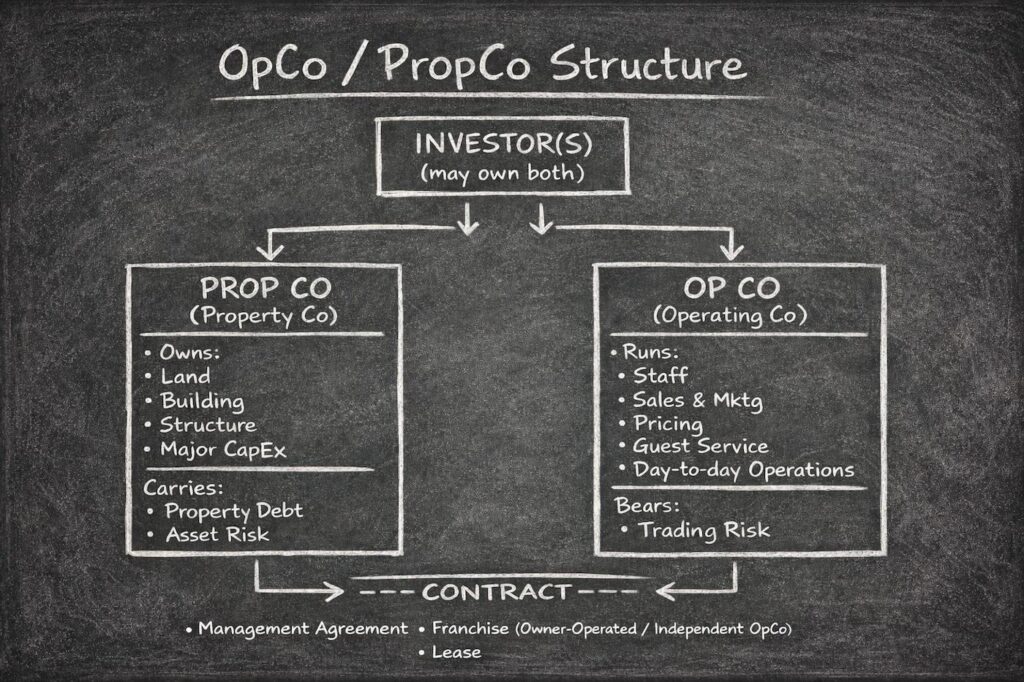
A hotel PropCo OpCo structure is a widely used ownership model that separates the real estate (Property Company or PropCo) from the hotel operating business (Operating Company or OpCo). In this structure, the PropCo owns the land and building, while the OpCo runs the hotel’s day-to-day operations under a lease, management agreement, or franchise arrangement. By separating real estate risk from trading risk, this model allows investors and operators to allocate capital, expertise, and financial exposure more efficiently.
Role of the Property Company (PropCo)
The Property Company (PropCo) owns the hotel’s land and buildings and is responsible for the long-term physical asset. This includes the structure itself, major building systems, and compliance with planning, building, and life-safety regulations. PropCo typically funds and manages major capital expenditures, including structural repairs, roof replacements, major plant and equipment upgrades, and large-scale refurbishments.
From a financial perspective, PropCo carries the property-level debt and is exposed to interest rates, asset value cycles, and long-term market trends. Its income is generally derived from rent paid by the operating company or, in some structures, from a share of hotel profits. The primary investment objective for PropCo is stable income combined with long-term capital appreciation of the real estate.
Because PropCo is insulated from daily trading volatility, it is often attractive to institutional investors such as pension funds, insurance companies, and long-hold real estate investors.
Role of the Operating Company (OpCo)
The Operating Company (OpCo) is responsible for operating the hotel as a business. This includes staffing, payroll, sales and marketing, pricing strategy, revenue management, guest experience, and day-to-day maintenance. OpCo controls the hotel’s brand positioning and commercial performance and is directly exposed to changes in occupancy, room rates, labour costs, and seasonality.
OpCo generates revenue from hotel guests and bears the operating costs required to deliver the service. From this revenue, it pays rent to the property owner (if operating under a lease), along with utilities, consumables, payroll, and any applicable brand or franchise fees. The operator’s profit is the amount remaining after all operating expenses and rental or management obligations are paid.
As a result, OpCo carries the highest level of operational risk but also benefits most directly from strong trading performance and revenue growth.
Lease vs Management Agreement vs Franchise
The most important element of a hotel PropCo OpCo structure is the contract that defines the relationship between the owner and the operator. This agreement determines how risk and reward are shared and has a major impact on financing, valuation, and long-term sustainability.
Hotel Lease Structure
In a traditional lease structure, the operator leases the hotel from the owner for a long term, often 15 to 30 years or more. The rent may be fixed, turnover-based, or a hybrid combining a base rent with a percentage of revenue or profit. This structure provides predictable income for the owner but can put pressure on the operator during downturns if rent levels are set too aggressively.
Hotel Management Agreement
Under a management agreement, the owner retains full economic exposure to the hotel and appoints an operator to manage the property on its behalf. The operator is paid a base management fee, typically linked to revenue, and an incentive fee linked to profitability. This model is common in institutional and US-style hotel investments and allows owners to capture more upside, albeit with greater volatility.
Hotel Franchise Agreement
A franchise model sits somewhere in between, where the operator runs the hotel independently but uses an international brand’s name, systems, and distribution channels in exchange for franchise and marketing fees.
Why Institutional Investors Use Hotel PropCo OpCo Structures
Separating ownership and operations allows different investors to focus on what they do best. Property investors can concentrate on asset value, financing, and long-term income, while operators focus on hospitality expertise, service delivery, and revenue optimisation. This separation also makes hotels easier to finance, as lenders can underwrite stable property cash flows independently from trading risk.
From a strategic perspective, the structure provides flexibility. A hotel owner can sell the real estate without selling the operating business, replace an underperforming operator, or refinance the asset independently of the hotel brand. Similarly, operators can expand their portfolios without tying up capital in property ownership.
How Cash Flows in a Hotel Owner-Operator Model
In a classic hotel PropCo OpCo structure, hotel guests pay the operating company for accommodation and services. The operating company then covers all day-to-day operating costs before paying rent or management fees to the property owner. The owner uses this income to service debt, fund major capital expenditure, and generate investment returns. Any surplus remaining represents profit for the owner, while the operator retains operating profit after expenses.
A Simple Way to Think About It
At its core, a hotel PropCo OpCo structure separates real estate risk from trading risk. The property owner owns the bricks and mortar and thinks in decades, while the operator runs the hotel business and thinks in daily occupancy, pricing, and guest satisfaction. The strength of the model lies in aligning these two perspectives through a well-structured contract.
Further resources:
See HDG – Hotel Contract Lawyer Contacts
See Investopedia.com – “What Is an Opco? Definition, Example, vs. Propco“